
Mastering Task Management for a Fulfilling Life
In an era defined by rapid technological advancements and soaring workloads, the capacity to prioritize effectively has never been more critical. As individuals navigate a sea of emails, deadlines, and social commitments, mastering the art of decision-making becomes a gateway to personal and professional fulfillment. Effective prioritization is not merely about deciding what to tackle first; it requires a well-thought-out strategy that aligns with long-term goals and immediate responsibilities.
Benefits of Effective Prioritization
Prioritization yields a myriad of benefits, impacting both efficiency and emotional well-being. Consider the following:
- Increased Efficiency: When you focus on high-impact tasks rather than getting sidetracked by low-priority activities, you often attain quicker results. For instance, a marketing professional might prioritize a campaign launch over responding to routine inquiries, ultimately leading to greater visibility and improved ROI.
- Reduced Stress: Clarity in what needs to be accomplished helps in diminishing feelings of overwhelm and anxiety. By knowing exactly what requires immediate attention versus what can wait, you gain peace of mind—a critical factor in maintaining mental health amidst busy schedules.
- Enhanced Decision-Making: Prioritizing tasks enables you to streamline choices effectively. Knowing what matters most allows you to allocate resources efficiently and avoid indecision that can lead to paralysis in the face of numerous options.
Strategies for Effective Prioritization
Both organizations and individuals grapple with the complexities of multiple responsibilities. Proven techniques such as the Eisenhower Matrix aid in distinguishing tasks based on urgency and importance. This method categorizes tasks into four quadrants: urgent and important, important but not urgent, urgent but not important, and neither urgent nor important. Visualizing tasks in this manner significantly enhances clarity and focus.
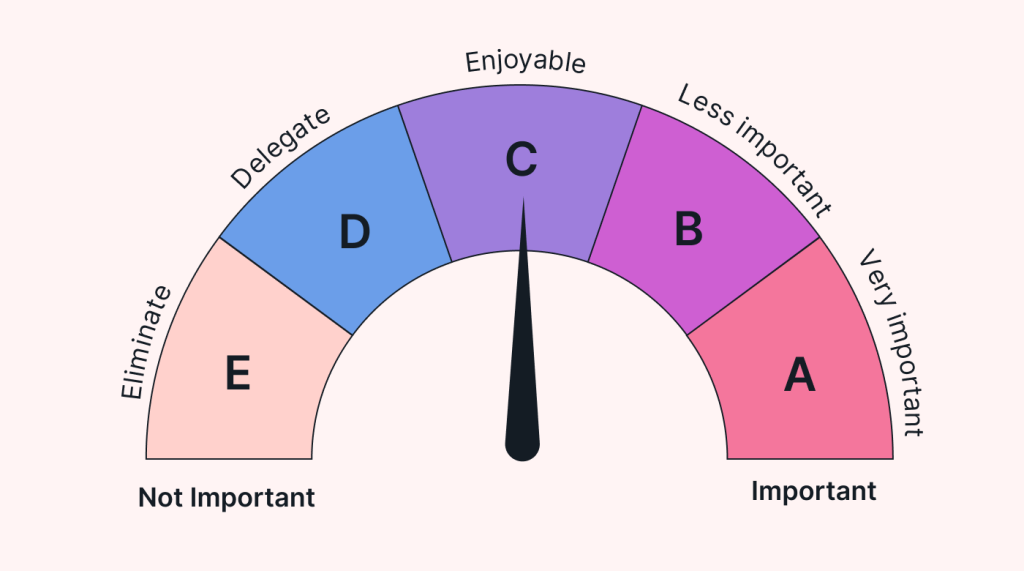
The ABCD prioritization method is another powerful tool. Here, tasks are ranked from A (most critical) to D (least critical), allowing individuals to concentrate their efforts on high-stakes assignments first. Moreover, time blocking involves dedicating specific time slots to particular tasks, minimizing distractions and encouraging deep work.
Research and Well-Being
Research underscores that effective prioritization not only boosts productivity but also enhances overall well-being. Studies have shown that when individuals rank tasks by urgency and importance, they are more likely to experience a structured and satisfying workday. This proactive approach mitigates stress and fosters a sense of accomplishment as tasks are systematically completed.
As we delve deeper into powerful strategies for enhanced task management, remember that the key to a more productive and stress-free life lies in your ability to prioritize effectively. By adopting these techniques, you can reclaim control over your workload, making strides toward your goals while fostering mental clarity.
DISCOVER MORE: Click here to learn about streamlining your daily tasks
Unlocking the Secrets to Superior Task Management
The ability to prioritize tasks is not just a desirable skill; it is a necessity in today’s fast-paced world. With diverse responsibilities competing for attention, knowing how to strategically manage tasks can lead to greater accomplishment and lower stress levels. But how exactly can one master the art of prioritization? Here are some critical strategies to transform your approach to task management.
Utilizing the Eisenhower Matrix
One of the most recognized techniques in prioritization is the Eisenhower Matrix. Devised by President Dwight D. Eisenhower, this framework helps individuals dissect their to-do lists by separating tasks according to their urgency and importance. By categorizing tasks into four distinct quadrants:
- Urgent and Important: Handle these tasks immediately. An example could be meeting a project deadline or dealing with a critical client issue.
- Important but Not Urgent: Schedule time for these tasks. This might involve planning a strategic project or pursuing professional development opportunities.
- Urgent but Not Important: Delegate if possible. Tasks such as handling minor inquiries or low-stakes meetings fall into this category.
- Neither Urgent nor Important: Consider eliminating these tasks altogether. These activities tend to be time-wasters that can detract from more significant responsibilities.
Implementing the Eisenhower Matrix in your daily routine not only clarifies priorities but also sheds light on your work habits. Are you spending too much time on tasks that don’t significantly impact your goals? This realization is the first step towards effective task management.
The ABCD Method for Task Ranking
Another effective strategy for honing task prioritization skills is the ABCD method. This straightforward system requires you to classify tasks based on their criticality:
- A: High-stakes tasks that need immediate attention.
- B: Important but not urgent tasks that you can schedule for later.
- C: Tasks of moderate importance that can be completed when time permits.
- D: Low-priority tasks that should be eliminated or delegated.
By categorizing tasks in this manner, you can sharpen your focus on what truly matters and allocate your resources efficiently. It turns your chaotic day into a more manageable structure, allowing for deeper concentration on priority projects.
Implementing Time Blocking
Time blocking represents a powerful technique for controlling your schedule and managing distractions effectively. This method involves designating specific time slots for different tasks or projects, turning your day into a series of focused sprints. By committing to a time block, you can enhance productivity and stave off distractions that often hinder progress.
Furthermore, when you establish clear boundaries for work periods, you not only protect your time but also cultivate a routine that aligns with your natural productivity patterns. Consider experimenting with techniques like the Pomodoro Technique within your time blocks for even greater focus.
Understanding and applying these prioritization techniques can be transformative. With effective task management strategies in your toolbox, you improve your likelihood of achieving both short-term goals and long-term aspirations. In the next sections, we will explore further strategies and research-backed benefits that come from prioritizing effectively.
| Technique | Advantages |
|---|---|
| Time Blocking | Enhances focus by allocating specific time slots for tasks, minimizing distractions. |
| ABC Method | Helps in categorizing tasks by priority, ensuring the most critical jobs are completed first. |
| The Eisenhower Box | Aids in distinguishing urgent tasks from important ones, ensuring effective decision-making. |
| SMART Goals | Encourages setting specific, measurable, achievable, relevant, and time-bound objectives for clarity. |
Understanding these techniques can revolutionize the way you approach your daily tasks. For instance, implementing the Time Blocking method allows individuals to create a structured schedule, limiting the scatter of effort across various responsibilities. The effectiveness of prioritizing is evident through the ABC method, which empowers people to make conscious choices about which tasks need immediate attention versus those that can wait.The Eisenhower Box further clarifies priorities by creating a visual representation of urgency versus importance, pushing individuals toward actions that yield the best results. Lastly, adopting the SMART Goals approach ensures that tasks align with broader personal or professional objectives, making efforts much more impactful and rewarding.Exploring these methods in depth reveals a treasure trove of resources for anyone looking to master the art of time management. By embracing these principles, you can transform chaos into order and truly harness the power of prioritization.
DISCOVER: Click here to learn how to simplify your daily tasks
Mastering Prioritization Techniques for Maximum Efficiency
As we delve deeper into the power of prioritization, it’s essential to explore methods that enhance focus and bolster efficiency even further. Beyond the standard techniques, innovative strategies and frameworks can contribute to more effective task management. One powerful concept is the SMART Goals Framework, which stands for Specific, Measurable, Achievable, Relevant, and Time-bound. By adopting this framework, individuals can ensure that their key tasks have clear objectives and deadlines, which not only clarifies priorities but also enhances accountability.
The SMART Goals Framework
Setting SMART goals can revolutionize how tasks are approached by making them more actionable. For instance, instead of stating, “I want to improve my skills,” a SMART goal would be, “I will attend two professional development workshops in the next six months to improve my project management skills.” This level of specificity is essential; it removes ambiguity and facilitates better planning. By measuring progress along the way, you can adjust your approach if necessary, ensuring that prioritization remains dynamic and effective.
Applying the 80/20 Rule
Another pertinent strategy in the realm of task management is the 80/20 Rule, also known as the Pareto Principle. This principle posits that approximately 80% of results come from 20% of efforts. In practical terms, this means identifying the few tasks that yield the highest impact towards your goals and focusing on them. By honing in on these high-impact activities, you can not only increase your productivity but also streamline your workload.
For example, if you’re working on a marketing campaign, pinpoint the 20% of strategies that generate 80% of your leads. By prioritizing these methods, you can maximize results without getting bogged down by less impactful tasks. This approach promotes efficiency and ensures that you’re channeling your efforts where they matter most.
Incorporating the Two-Minute Rule
The Two-Minute Rule, derived from productivity expert David Allen’s Getting Things Done method, suggests that if a task can be completed in two minutes or less, it should be done immediately. This method effectively clears out minor tasks that might otherwise clutter your to-do list and distract you from more significant responsibilities. Furthermore, it leads to a sense of quick wins that can boost motivation and inertia.
Imagine managing emails or quick phone calls: instead of contemplating these smaller tasks for long periods, you can swiftly tackle them, maintaining momentum throughout your day. This helps reduce procrastination, ensuring that you aren’t overwhelmed by a mountain of small tasks that could dampen your productivity.
Leveraging Digital Tools for Prioritization
In today’s digital age, integrating technology into your task management approach can propel prioritization to new heights. Numerous applications, such as Todoist, Trello, and Asana, offer robust frameworks that allow for categorizing tasks, setting deadlines, and collaborating with team members seamlessly. These platforms not only help keep everything organized but also enable real-time updates, ensuring that nothing falls through the cracks.
Moreover, these tools often come equipped with features that support prioritization, such as tagging and color-coding tasks. By utilizing such visual aids, you can quickly identify critical tasks and manage your time effectively, thus enhancing your overall efficiency. With proper implementation of digital tools, task management becomes streamlined, making it easier to keep your priorities front and center.
Overall, mastering prioritization through a variety of techniques empowers individuals to tackle their tasks with a sense of clarity and purpose. The adaptability of these methods allows for personalization, enabling you to find what works best for your unique workflow. As you experiment with these strategies, you may discover the transformations they can bring to your productivity and path toward achieving your goals.
DIVE DEEPER: Click here to learn more
Conclusion: Unlocking Your Productivity Potential Through Prioritization
In a world buzzing with demands and distractions, harnessing the power of prioritization is crucial for effective task management. As we have explored, implementing diverse techniques such as the SMART Goals Framework, the 80/20 Rule, and the Two-Minute Rule can transform your approach to productivity. Each method offers unique advantages, helping you sift through tasks to focus on what truly matters, driving significant progress toward your goals.
Moreover, the incorporation of digital tools plays an essential role in enhancing prioritization. By leveraging applications like Todoist and Trello, you can easily organize your tasks, set deadlines, and maintain visibility on your workflow, ensuring that nothing is overlooked. The visualization features of these platforms serve as powerful reminders of what requires your attention, allowing you to manage both time and energy effectively.
Ultimately, the journey to mastering prioritization is one that requires personalized adaptation. Each individual must experiment with various techniques to discover which combinations work best for their specific circumstances. By doing so, you’ll not only boost your productivity but also fortify your sense of purpose and direction in tackling daily challenges. So, embrace the art of prioritization, and unlock your potential for achieving greater efficiency and success in all aspects of your life.
Related posts:
Creating a Structured Environment: How Physical Space Affects Productivity and Focus
Leveraging Technology: Apps and Tools for Streamlining Daily Tasks
The Art of Priority: Using the Eisenhower Matrix to Organize Tasks Effectively
Mind Mapping to Increase Efficiency: Visualizing Ideas and Tasks for Better Organization
Establishing Productive Morning Routines: Strategies to Start the Day with Energy and Focus
Creating an Efficient Work Environment: Tips for Organizing Your Space and Improving Focus

Linda Carter is a writer and productivity and personal organization specialist focused on helping readers build better routines, manage their time, and stay on top of daily priorities. With experience covering practical planning methods, habit-building strategies, and tools for organization, Linda shares actionable guidance on our platform. Her goal is to empower readers with clear, realistic tips to work smarter, reduce overwhelm, and stay consistent over time.