
Unlocking Your Productivity Potential
In today’s fast-paced world, managing tasks and projects can often seem like a daunting challenge. The sheer volume of responsibilities can cloud our mental clarity, making it difficult to focus on what truly matters. Fortunately, the ‘Getting Things Done’ (GTD) technique offers a structured approach to regain control and enhance productivity.
The essence of GTD lies in its simple yet powerful principles that allow individuals to transform chaos into order. Key elements of this methodology include:
- Capturing: This initial step is all about gathering everything that occupies your mind—from to-do lists to spontaneous ideas—into a trustworthy system. Whether it’s a digital tool or traditional pen and paper, the goal is to have a single repository where all your thoughts can reside, easing mental load.
- Clarifying: Here, you dissect what each item means. Is it a task you can complete in two minutes? If so, do it right away. If it’s a bigger project, break it down into actionable steps, such as making a list of required materials or outlining necessary deadlines. This step ensures clarity in execution.
- Organizing: With tasks clearly defined, it’s time to categorize them. Group similar tasks, set deadlines, and prioritize them based on urgency and impact. This arrangement allows you to tackle similar tasks together, enhancing efficiency and minimizing the cognitive load of constantly switching between different types of work.
- Reflecting: Regular reflection is crucial for maintaining momentum. Weekly reviews allow you to assess what you’ve accomplished, adjust your priorities, and plan for the upcoming week effectively. This step not only keeps you on track but also helps in fine-tuning your overall strategy for productivity.
- Engaging: Finally, this principle emphasizes focusing on the present moment. With a clear plan and understanding of your priorities, choose tasks that fit your energy levels and available time. This allows for a sense of accomplishment as you engage with the tasks at hand.
What makes the GTD technique particularly appealing is its adaptability. It’s not just a tool for busy professionals; students juggling coursework, parents managing household responsibilities, or entrepreneurs launching new initiatives can all find value. This methodology provides a framework that fosters greater mental clarity amidst life’s complexities.
Moreover, the techniques can be personalized. For instance, a college student might utilize apps like Todoist or Notion to detail their assignments, while a corporate manager may prefer to use Microsoft Planner for team collaboration. The versatility of GTD allows it to fit seamlessly into various lifestyles, accommodating unique needs and preferences.
As we dive deeper into this approach, we will explore how each element contributes to a more organized and fulfilling life. The landscape of task management is ever-evolving, and mastering GTD may just be the key to elevating your productivity potential.
DISCOVER MORE: Click here to learn effective strategies
Understanding the Foundations of GTD
The ‘Getting Things Done’ technique is more than just a productivity hack; it is an intricate system designed to help individuals streamline their workflows and declutter their minds. The core premise of GTD rests on the idea that the human brain is not meant to be a storage unit for tasks and responsibilities. By effectively capturing and organizing your commitments, you free up mental space for higher-level thinking and creativity.
The driving force behind GTD is its systematic approach, which consists of five key stages: capturing, clarifying, organizing, reflecting, and engaging. Understanding these steps in greater detail will provide insight into how they can drastically improve your task management capabilities.
Capturing: The Foundation of Mental Clarity
In the capturing phase, you must collect all thoughts, tasks, and responsibilities that compete for your attention. This could range from work projects to personal errands or even spontaneous ideas that arise throughout your day. The aim is to transfer these thoughts from your mind into a trusted external system—this could be a digital app, a notebook, or a simple sticky note kept close at hand. By doing so, you not only alleviate mental burden but also set the stage for the subsequent steps in the GTD framework.
Clarifying: Breaking Down the Chaos
Once you’ve captured your tasks, the next step is to clarify what each item truly represents. This involves asking critical questions such as:
- Is it actionable?
- Can I complete it in less than two minutes?
- If not, what are the smaller steps involved?
- What is the deadline for this task?
This detailed scrutiny ensures that ambiguity is minimized and clarity is maximized. By breaking larger projects down into smaller, digestible tasks, you empower yourself to take concrete action rather than becoming overwhelmed by the enormity of what lies ahead.
Organizing: Structuring for Success
The organizing phase is where the methodical approach of GTD begins to shine. In this step, tasks and projects are categorized according to their nature and urgency. This could involve creating different lists such as “Immediate Actions,” “Projects,” or “Waiting On,” depending on what works best for you. Implementing a structured system not only simplifies the process of selecting tasks to work on but also minimizes the cognitive load that arises from constantly switching between unrelated tasks. The result is a clearer roadmap towards achieving your goals.
The combination of these three foundational steps lays the groundwork needed to enhance your productivity and mental clarity. Each element of the GTD technique is designed to interlink harmoniously, promoting an organized mindset that fosters both focus and creativity. As we continue to delve deeper into the GTD methodology, you will discover how regular reflection and engagement with your tasks can act as powerful tools in maintaining your productivity momentum.
The ‘Getting Things Done’ Technique: How to Organize Tasks and Projects to Increase Mental Clarity
Continuing our exploration of the ‘Getting Things Done’ (GTD) technique, it’s essential to understand its practical applications and the transformative benefits it provides for personal productivity. This time management method revolves around capturing tasks and organizing them systematically to clear mental clutter. By doing so, individuals can enhance their focus, reduce stress, and achieve greater efficiency in their daily routines.
One of the fundamental principles of GTD is the “Five Stages of Mastering Workflow”. These stages—Capture, Clarify, Organize, Reflect, and Engage—guide users through a structured process of managing tasks. Initially, you begin by capturing everything that requires your attention, whether it’s an idea, a reminder, or a project. This influx of tasks streams into a trusted system, relieving your mind from trying to remember them.
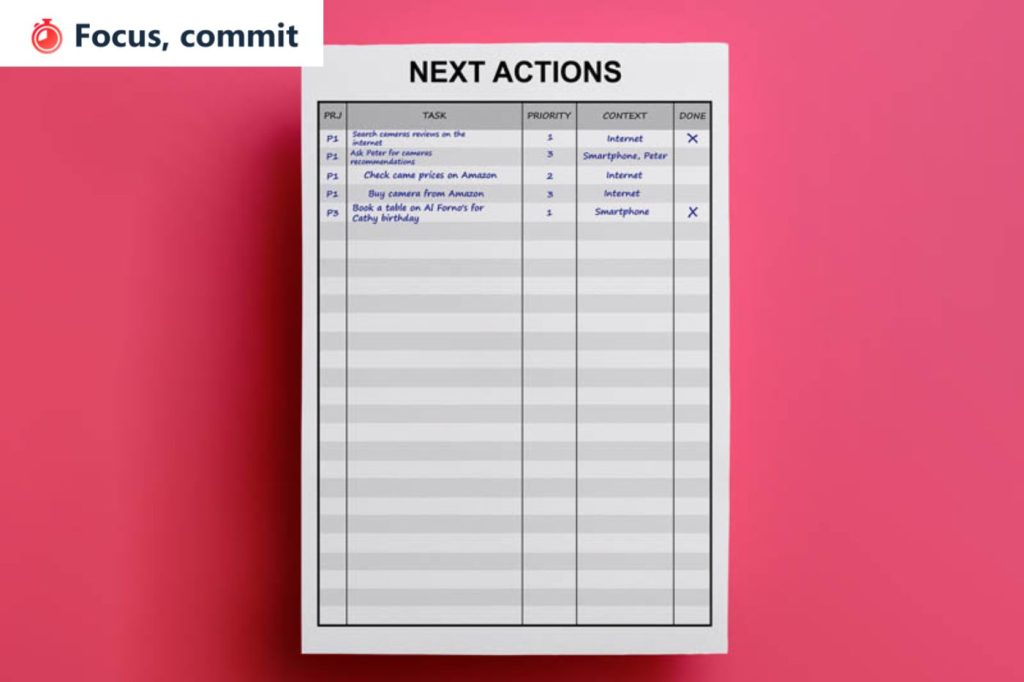
Following this, the second phase involves clarifying these inputs. Consider whether they are actionable, and determine the next steps. As you proceed to organize your tasks, you prioritize and sort them into categories such as “Projects,” “Next Actions,” or “Waiting For”. Such categorization is fundamental in maximizing productivity and allows you to easily navigate your tasks when needed.
The discipline of regularly reflecting—typically weekly—on your task lists and commitments ensures that you remain aligned with your goals and allows you to adjust your priorities accordingly. The final stage, engaging, is where you put your organized tasks into action, creating momentum in your personal and professional life.
| Category | Key Features |
|---|---|
| Organizational Clarity | By categorizing tasks and breaking projects into manageable parts, GTD fosters a sense of organized structure. |
| Mental Clarity | The process reduces cognitive overload, allowing individuals to think more clearly and focus on meaningful work. |
These structured methods not only streamline daily tasks but also contribute to the overarching goal of mental clarity. When tasks are organized and prioritized effectively, individuals can dedicate their energy to the most critical areas of their lives, leading to fulfilling outcomes.
DISCOVER MORE: Click here to enhance your productivity
Reflecting and Engaging: Maintaining Your Momentum
After capturing, clarifying, and organizing your tasks, the Getting Things Done (GTD) technique emphasizes the importance of regularly reflecting on your goals and daily responsibilities. This step involves taking time—often weekly—to review your task lists and project status. By doing so, you gain valuable insight into your progress and any areas needing adjustment. Regular reflection helps ensure that you are not just going through the motions but are actively participating in and shaping your productivity journey.
Why Reflection Matters
Research shows that regular reflection can enhance mental clarity and focus. It allows you to recalibrate your priorities and determine which tasks align with your broader objectives. In the GTD framework, this could include reviewing your “Projects” list, which contains all ongoing initiatives, and identifying any items that require immediate attention. Additionally, this step helps clear any mental clutter caused by lingering thoughts about tasks that are not currently relevant. By discarding what no longer serves you, you can devote your mental resources to what truly matters.
Engaging: The Power of Taking Action
The final stage of the GTD process is engaging. This is where the foundation you’ve built begins to produce actual results. It’s about taking deliberate, focused actions based on the organized task lists you’ve created. GTD encourages you to choose your actions based on your context, available time, and energy levels.
For example, if you have just 10 minutes free before a meeting, you might opt to tackle a quick task from your “Immediate Actions” list. Conversely, if you’re at your most creative, you might focus on a task that requires deeper thought, such as brainstorming ideas for a project. This approach not only enhances productivity but also ensures that you’re working on the right tasks for the right reasons at the right times.
Utilizing Technology in GTD
In today’s fast-paced digital environment, leveraging technology can enhance your GTD practice. Several applications and tools, such as Todoist, Evernote, and Microsoft To-Do, offer features specifically designed to support each of the GTD stages. These tools can help you capture thoughts instantly, produce reminders for reflection, and create lists that are accessible from multiple devices—keeping you organized regardless of where you are.
Moreover, automation can streamline mundane tasks, allowing you to put more brainpower towards strategic endeavors. For instance, using workflow automation software to manage repetitive emails or data entries decreases the time spent on menial tasks and increases your ability to focus on critical projects that drive growth and innovation.
The Benefits of Implementing GTD
Adopting the GTD methodology not only increases mental clarity but can also lead to significant efficiency gains. Studies have indicated that individuals who employ structured task management techniques like GTD report lower stress levels and greater job satisfaction. They often find themselves achieving more in less time, which ultimately paves the way for increased creativity and higher overall performance.
Understanding and implementing the GTD framework can take time and practice; however, the long-term benefits of a clearer mind and a well-organized life can change the way you approach both your personal and professional responsibilities. The structure provided by GTD enables you to engage meaningfully with your tasks, creating a pathway to not just productivity, but also personal serenity.
DISCOVER MORE: Click here to enhance your workspace
Conclusion: Embracing the GTD Method for a More Focused Life
In an era where distractions abound, the Getting Things Done (GTD) technique emerges as a beacon for those seeking to enhance their mental clarity and productivity. By implementing a systematic approach to organizing tasks and projects, GTD offers a structured pathway that not only facilitates task management but also ignites a deeper sense of engagement with our professional and personal lives.
The core principles of GTD—capturing, clarifying, organizing, reflecting, and engaging—work symbiotically to create a holistic productivity framework. As you integrate these steps into your daily routines, you begin to notice the cumulative benefits that arise from decluttering your mind and strategically aligning your actions with your goals. Regular reflection, critical in the GTD process, acts as a catalyst for ongoing growth, enabling you to fine-tune your focus and discard distractions that no longer serve your objectives.
Moreover, the advent of technology provides valuable tools that complement your GTD practice. Digital applications streamline the task organization process, providing instant accessibility and automation that free up precious cognitive resources for more critical thinking and creativity. Ultimately, adopting the GTD methodology can lead to improved job satisfaction and reduced stress, which are invaluable in today’s fast-paced world.
As you embark on your journey towards mastering the Getting Things Done technique, remember that the goal is not merely productivity, but achieving a harmonious balance that encourages mental clarity and personal fulfillment. Invest the time to explore and adapt GTD principles, and you may find that the serenity and focus you gain enrich your overall quality of life.
Related posts:
Mind Mapping to Increase Efficiency: Visualizing Ideas and Tasks for Better Organization
Developing Productivity Habits: How the 21-Day Rule Can Transform Your Personal Organization
The Importance of Strategic Breaks: How Scheduled Intervals Can Boost Your Productivity
Maximizing Productivity with the Pomodoro Technique: A Deep Dive into Time Management
Automation of Daily Tasks: Tools and Methods to Reduce Work Time and Increase Productivity
Integrating Time Blocking Technique into Your Schedule: How to Organize the Day in Focused Periods

Linda Carter is a writer and productivity and personal organization specialist focused on helping readers build better routines, manage their time, and stay on top of daily priorities. With experience covering practical planning methods, habit-building strategies, and tools for organization, Linda shares actionable guidance on our platform. Her goal is to empower readers with clear, realistic tips to work smarter, reduce overwhelm, and stay consistent over time.