
The Power of Mind Mapping in Enhancing Clarity and Creativity
In today’s high-speed environment, where the sheer volume of information can be overwhelming, mind mapping stands out as a practical and innovative solution for individuals seeking to boost their productivity. By transforming abstract thoughts into visual diagrams, mind mapping seamlessly merges organization with creativity, allowing users to gain clarity from chaos.
One of the standout benefits of mind mapping is its engagement of both hemispheres of the brain. When you construct a mind map, your left brain—the logical side responsible for language and analysis—works alongside your right brain, which governs creativity and visual imagery. This dual processing helps to foster a more comprehensive understanding of subjects as information is interlinked visually.
Memory retention also sees a significant improvement through mind mapping. Research suggests that people remember visual information approximately six times better than text alone. By converting key concepts into colorful images, symbols, and branches in a mind map, individuals are better equipped to recall and apply information. For example, students organizing a study plan for a history exam may incorporate various visual elements, such as timelines, maps, and diagrams, which can enhance their recall of significant events and figures.
Moreover, mind mapping encourages creativity by liberating the mind from strict linear thought patterns. Individuals can explore connections between disparate ideas, opening the door to innovative solutions and fresh perspectives. A common scenario is a brainstorming session at work, where a team uses mind mapping to generate ideas for a new marketing campaign. By visualizing all concepts and how they interrelate, the team can uncover unique angles that they might not have considered otherwise.
For those looking to integrate mind mapping into their routine, it’s beneficial to explore various strategies that suit diverse purposes. For instance:
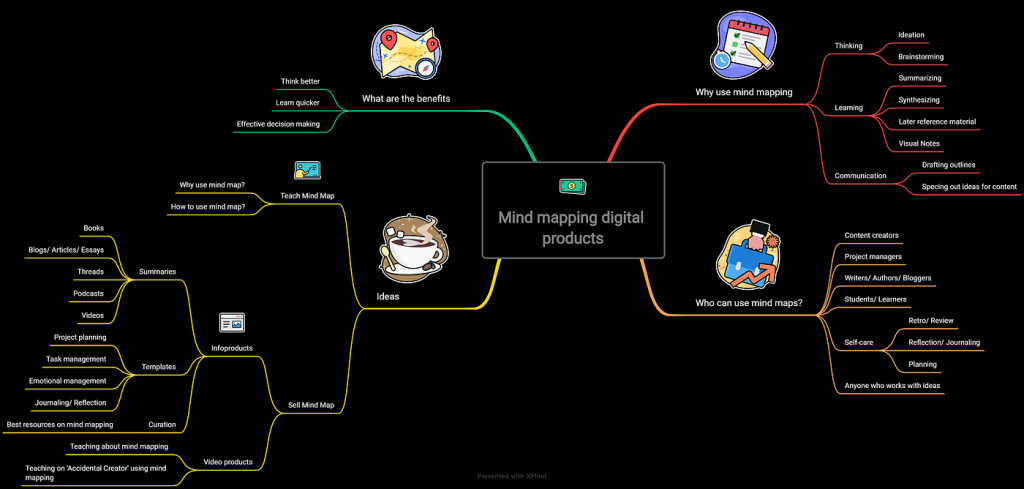
- Use simple templates: Start with basic structures for easy navigation.
- Color coding: Assign different colors for categories to enhance visual appeal and understanding.
- Digital tools: Leverage apps like MindMeister or XMind that facilitate online collaboration and easy adjustments.
Additionally, embracing a variety of mind map examples tailored to specific needs can enrich your understanding of their versatility. Whether it’s for mapping out a business strategy, planning a wedding, or studying for exams, the adaptability of mind mapping is boundless.
As we embark on this exploration of mind mapping, you’ll uncover not only the techniques that refine your organizational skills but also the tools and resources that make this approach accessible to everyone. With mind mapping, you can transform the way you think and communicate, ultimately leading to greater success and fulfillment in both personal and professional endeavors.
DISCOVER MORE: Click here to learn how to enhance your workspace
How Mind Mapping Transforms Thoughts into Actionable Plans
In the quest for better organization and increased efficiency, mind mapping serves as an invaluable tool that empowers individuals and teams alike to translate ideas into manageable tasks. The visual representation of thoughts allows users to see connections and relationships between concepts more clearly, effectively transforming their abstract musings into structured frameworks that can guide action. This visual approach not only clarifies thinking but also promotes forward momentum in projects, proper task allocation, and goal achievement.
At the heart of successful mind mapping is the concept of hierarchical organization. By breaking down a central idea into subtopics and further into specific tasks, users create a roadmap that visually guides them through complex information. For instance, an entrepreneur brainstorming a new business venture can start with the business idea at the center, then branch out to categories such as market analysis, funding options, marketing strategies, and operational plans. This enables the individual to prioritize tasks and pinpoint where additional research or resources are needed.
Beyond mere organization, mind mapping also enhances communication, particularly in collaborative environments. Imagine a team in a marketing agency brainstorming for a new campaign. Traditionally, such sessions may devolve into chaotic discussions where ideas clash and critical points are overlooked. Conversely, utilizing a mind map keeps the conversation focused. As team members contribute ideas, they can visually place each thought within a larger context, ensuring that all perspectives are acknowledged, leading to a more cohesive plan.
Additionally, mind mapping can revolutionize personal productivity by aiding in task management. When individuals leverage mind maps to plan their daily activities or long-term projects, they create a personalized visual guide that motivates them to stay on course. This dynamic representation encourages users to balance short-term duties with long-term objectives, making them less likely to lose sight of overall goals. Here are some practical applications:
- Daily Planning: Create a mind map for daily tasks to clearly visualize priorities.
- Project Management: Outline milestones, deadlines, and responsibilities with clear connections.
- Goal Setting: Use mind maps to delineate short-term and long-term goals, ensuring alignment with broader ambitions.
The adaptability of mind mapping extends beyond mere organization and into the realm of continuous improvement. By revisiting and revising mind maps as tasks progress, individuals can track their own performance and identify areas for enhancement. This dynamic allows for fluidity in adapting to changes or unexpected challenges, reinforcing the notion that efficiency comes not just from rigid planning, but from an adaptable mindset.
As this exploration continues, the techniques and insights uncovered will not only refine your organizational skills but will also serve as gateways to a more efficient and creative approach to life’s responsibilities. By mastering mind mapping, you can harness the full potential of your thoughts, ultimately paving the way for greater achievement and satisfaction in varied aspects of life.
| Advantage | Description |
|---|---|
| Enhanced Creativity | Mind mapping encourages free flow of ideas, leading to innovative solutions and more creative thinking. |
| Improved Retention | Visualizing information helps in remembering and recalling data efficiently, enhancing overall learning. |
Mind mapping is not merely a tool but a transformative technique that redefines how we perceive organization and task management. By integrating visual elements with text, it reshapes our cognitive processes. The enhanced creativity aspect enables users to think outside the box, as each connection made between branches fosters unique perspectives, ultimately leading to innovative ideas and solutions. Additionally, the improved retention factor is paramount for students and professionals alike. With a visual representation of concepts, the mind retains information far better than traditional linear note-taking methods. These elements of mind mapping not only increase efficiency but also encourage more organized thought processes that can be applied in various realms, from personal planning to business strategy. Discovering how to effectively leverage this technique can spell the difference between chaos and organized creativity.
DISCOVER MORE: Click here to learn how to prioritize without guilt
Leveraging Technology for Enhanced Mind Mapping
As we delve deeper into the realms of mind mapping, it becomes evident that modern technology significantly amplifies its potential. With a plethora of software and applications available today, individuals and teams can create mind maps that are not only visually appealing but also highly interactive and customizable. Programs such as MindMeister, XMind, and Coggle offer features that allow users to seamlessly integrate multimedia elements like images, links, and videos into their mind maps. This integration transforms static ideas into dynamic representations that engage the mind on multiple levels, facilitating a deeper understanding of complex concepts.
One notable advantage of digital mind mapping tools is the collaboration feature. In a world where remote work is increasingly prevalent, these tools allow multiple users to contribute ideas in real-time, regardless of their physical location. Teams can brainstorm together via online platforms, making modifications and adding thoughts instantaneously. This fosters a sense of community and shared purpose, which can be particularly beneficial for creative brainstorming sessions or when seeking feedback on proposed projects.
Moreover, the incorporation of cloud-based storage solutions enables users to access their mind maps anytime and anywhere. Imagine being able to revisit your project outlines during your commutes or when inspiration strikes while out and about. This flexibility enhances productivity, allowing for spontaneous brainstorming and ensuring that no idea is cast aside due to the limitations of traditional planning tools.
Incorporating mind maps into everyday workflows also promotes better information retention and recall. Research indicates that visual learning aids, like mind maps, can significantly improve memory retention compared to linear note-taking methods. The graphical structure helps create mental associations, making it easier for individuals to retrieve information when needed. Educators, in particular, have found mind mapping to be an effective way to present complex subjects, making learning enjoyable and interactive for students. By engaging learners visually, complex theory becomes digestible, paving the way for holistic understanding.
As minds sharpen through practice, many turn to mind mapping for problem-solving. The structured layout encourages out-of-the-box thinking, allowing users to explore alternative options and devise solutions. For example, when faced with a project roadblock, a team can utilize a mind map to perform a SWOT analysis (Strengths, Weaknesses, Opportunities, Threats) to identify paralyzing factors and brainstorm solutions collaboratively. This thorough exploration before action helps in making informed decisions, reducing the likelihood of needless obstacles down the road.
To illustrate the effectiveness of mind mapping in real-world scenarios, consider tech giant Google. Renowned not just for its search engine prowess, Google integrates visual mappings within its project management approach. Teams utilize mind maps to outline creative ideas, product features, and operational processes. This strategy enhances efficiency in how they turn innovative ideas into actionable steps, helping maintain their competitive edge in an ever-evolving industry.
To maximize results, adopting a systematic approach to mind mapping is essential. Begin with an initial draft that outlines your primary concerns or goals. Then, layer in details, branching off with supporting ideas and relevant tasks. Periodically review and update your mind maps as projects progress, ensuring you remain aligned with your objectives and can adapt as needed. This proactive method not only keeps you organized but also positions you to seize new opportunities as they arise.
DISCOVER MORE: Click here to learn about effective task prioritization techniques
Conclusion
In a fast-paced world where time is of the essence, mind mapping stands as a powerful tool for enhancing efficiency and organization. By transforming abstract thoughts into structured visual frameworks, individuals and teams are able to navigate complex projects with clarity and confidence. As discussed, the integration of technology enriches the mind mapping experience, making collaboration seamless and fostering an environment where ideas can flourish, irrespective of geographical constraints. Digital platforms not only allow for real-time contributions but also harness the potential of multimedia elements, making brainstorming sessions more interactive and engaging.
Furthermore, the use of mind maps significantly aids memory retention and comprehension, a reason why this technique has found its way into educational settings and professional training programs. With research underscoring its effectiveness, it’s clear that visual organization does more than simplify tasks—it enhances our capacity to recall information and draw connections between concepts.
For those seeking a competitive edge, adopting a systematic approach to mind mapping can be a game changer. By continuously refining and updating mind maps, users stay aligned with goals and can respond adeptly to emerging challenges or opportunities. As organizations like Google have demonstrated, the integration of mind mapping into project management not only streamlines processes but also inspires innovation.
In conclusion, by embracing mind mapping as part of your organizational toolkit, you are not just improving task management—you are empowering your creativity and sharpening your problem-solving abilities. As you take these concepts to heart, consider venturing into the world of mind mapping software to unlock its full potential. The organized visual representation of ideas and tasks awaits, ready to enhance your efficiency and transform your professional journey.
Related posts:
The Importance of Weekly Planning: Strategies to Anticipate Challenges and Maximize Results
Developing Productivity Habits: How the 21-Day Rule Can Transform Your Personal Organization
Creating a Structured Environment: How Physical Space Affects Productivity and Focus
Maximizing Efficiency with the Pomodoro Technique: How to Split Work into Blocks to Increase Product...
Establishing Productive Morning Routines: Strategies to Start the Day with Energy and Focus
The Power of Prioritization: Techniques for Effective Task Management

Linda Carter is a writer and productivity and personal organization specialist focused on helping readers build better routines, manage their time, and stay on top of daily priorities. With experience covering practical planning methods, habit-building strategies, and tools for organization, Linda shares actionable guidance on our platform. Her goal is to empower readers with clear, realistic tips to work smarter, reduce overwhelm, and stay consistent over time.