The Science Behind Memory Palaces: A Historical Perspective
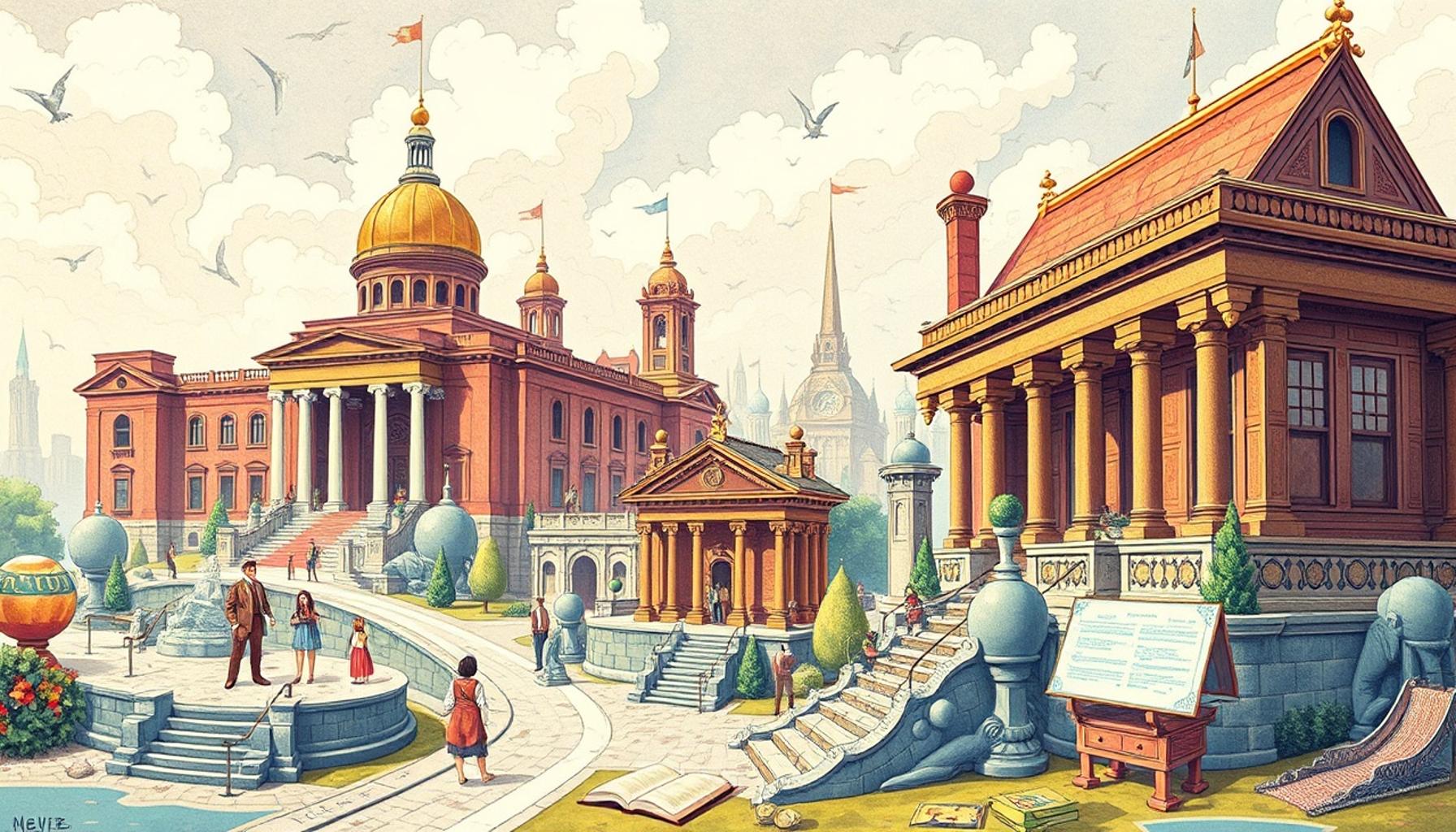
The Fascination of Memory Techniques
Have you ever wondered how ancient scholars memorized vast amounts of information? It’s a fascinating process called the memory palace technique, which has roots in the world’s earliest civilizations. This method of memorization has proven to be not only effective but also intriguing, revealing how our ancestors utilized cognitive strategies that still hold value today.
Ancient Origins
The concept of a memory palace traces back to ancient Greece and Rome, where renowned philosophers and orators were deeply invested in the art of rhetoric and memory training. One of the earliest mentions of this technique is attributed to Simonides of Ceos, a Greek poet who, after a tragic accident where he survived a building collapse, famously used the visualization of the banquet hall’s arrangement to help him recall the identities of the deceased. By associating each guest with specific locations in the hall, he transformed an otherwise overwhelming task into a manageable one.
Modern Applications
Today, the memory palace technique is employed by memory champions worldwide, especially in competitions where participants memorize decks of cards or long sequences of numbers in record times. For instance, USA Memory Championship winners often credit their success to this powerful technique. Beyond competitions, students and professionals use memory palaces to memorize information ranging from vocabulary to complex presentations, illustrating their versatility in both academic and professional settings.
Psychological Insights
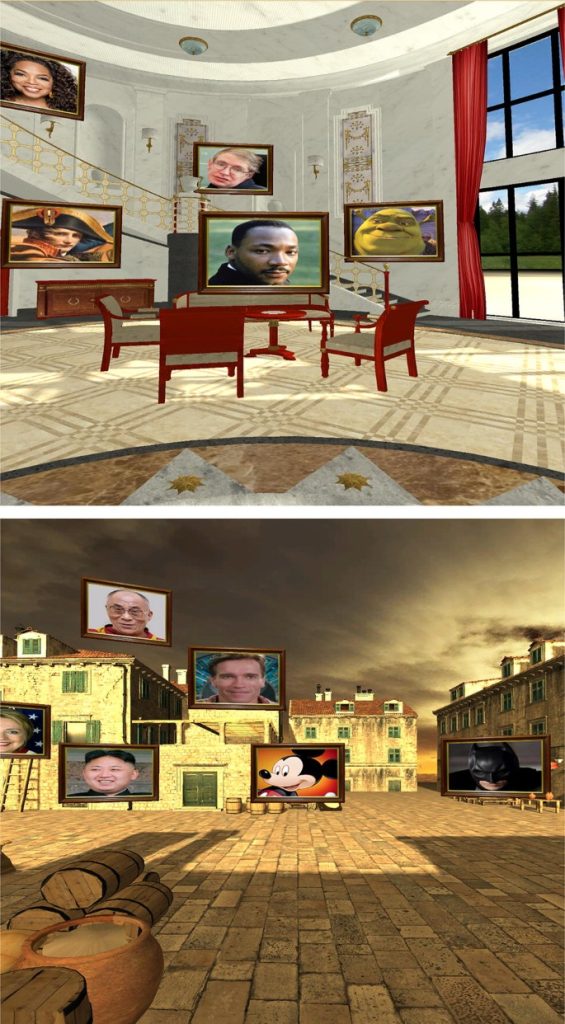
Research into cognitive psychology highlights how spatial memory and visualization play crucial roles in recall. Studies have shown that people have a natural aptitude for remembering spaces rather than abstract concepts. This cognitive bias can be exploited using memory palaces, where individuals picture a familiar environment—like their childhood home or daily commute—and populate it with the facts they want to remember. This crosslinking of sensory experiences facilitates a stronger memory trace, making recall easier and more efficient.
Notable Figures and Their Contributions
Beyond Simonides, other historical figures such as Aristotle also contributed to the development of memory techniques, emphasizing the significance of environment in the retention of information. By recognizing the integral relationship between memory and space, these thinkers paved the way for structured mnemonic devices that shaped educational practices for centuries. Their revolutionary insights are the bedrock upon which modern memorization techniques are built.
Exploring Connections and Contemporary Relevance
As we delve into the science behind memory palaces, we uncover their historical significance and their modern relevance. The surprising connections between ancient practices and contemporary cognitive strategies underscore the continuity of human thought processes. With ongoing research into memory functions and techniques, the legacy of the memory palace continues to influence how we approach learning and retention today. This exploration serves not only to highlight the ingenuity of our ancestors but also to inspire modern individuals to harness these ancient tools in an increasingly information-saturated world.
DISCOVER MORE: Click here to learn about the link between nutrition and memory exercise
Unveiling the Memory Palace Technique
The memory palace technique, also known as the method of loci, utilizes spatial memory to aid in the recall of information. This powerful mnemonic strategy operates on the premise that humans are inherently more adept at remembering locations and visual imagery rather than abstract concepts. Suffice it to say, the walls of our minds can transform into expansive corridors lined with memories waiting to be accessed. This technique has undergone significant evolution, but its core principles remain deeply rooted in practices established long ago.
How Memory Palaces Work
Central to the effectiveness of memory palaces is the idea of spatial relationships. When individuals establish a mental framework—such as their home or a familiar route—they fill each room or location with vivid images representing the information they wish to remember. By mentally walking through this envisioned space, they can retrieve information by “visiting” each location. This strategy engages multiple cognitive processes, including visualization, association, and spatial awareness, making it easier to retain and recall large quantities of information.
Practical Steps to Create a Memory Palace
Creating an effective memory palace requires careful planning and creativity. Here are essential steps to develop your own:
- Choose a Familiar Location: Select a place you know well, such as your home, school, or a park.
- Define Key Areas: Identify distinct locations within that space, such as rooms, corners, or landmarks.
- Visualize Information: Create vivid mental images for the information you want to retain, associating them with the specific locations you identified earlier.
- Practice Retrieval: Regularly walk through your memory palace in your mind, visiting each area to reinforce the connections.
The Role of the Brain in Spatial Memory
Neuroscientific research emphasizes the critical role of the hippocampus in spatial navigation and memory formation. This part of the brain is responsible for organizing and storing memories related to the environment. Studies indicate that when utilizing memory palaces, the hippocampus not only aids in encoding spatial information but also enhances the retrieval process. As individuals mentally navigate their memory palaces, they activate specific neural pathways, enabling more robust recall.
The Intriguing Intersection of History and Science
This historical method of memory enhancement has notable implications for modern cognitive psychology and neuroscience. The continued relevance of memory palaces highlights the extraordinary nature of human memory systems, revealing a fascinating convergence between ancient practices and contemporary methodologies. As researchers delve deeper into the mechanics of memory, they uncover stimulating intersections of history and science that propel our understanding of the human mind forward.
| Advantage | Description |
|---|---|
| Enhanced Memory Retention | Using a memory palace allows individuals to organize and retrieve information more effectively. |
| Cognitive Visualization Techniques | Engaging with the method stimulates the brain through visual and spatial memory integration, enhancing learning experiences. |
The use of memory palaces dates back to ancient Greece, a technique famously employed by orators and scholars alike for memorizing speeches and texts. The concept revolves around the idea of associating vivid mental images with specific information, thereby creating a framework that the mind can more easily navigate. Throughout history, figures like Cicero and Aristotle acknowledged the effectiveness of this mnemonic device, demonstrating its value across various learning contexts. In modern times, the science behind memory palaces can be understood through cognitive psychology; they engage multiple regions of the brain, prompting the inner workings of memory and recall to be leveraged in everyday learning.Implementing a memory palace can transform exhaustive study sessions into exhilarating mental explorations. Imagine walking through significant rooms in a grand estate, each containing detailed symbols or items representing chunks of information. This method not only makes learning enjoyable but also fosters a deeper connection with the material, as the act of visualization is combined with spatial reasoning. As interest in cognitive enhancement grows, exploring this ancient technique could prove to be an invaluable skill in the digital age.
DISCOVER MORE: Click here to enhance your memory skills
The Evolution of Memory Techniques Through the Ages
While the memory palace technique has roots in ancient history, it has undergone transformations that reflect societal changes and advancements in our understanding of cognition. The origins of this method can be traced back to classical antiquity, where philosophers like Aristotle and Simonides of Ceos emphasized the importance of spatial memory. They recognized that aligning information to specific locations could dramatically improve recall, paving the way for mnemonic systems that would influence educational practices for centuries.
The Renaissance and the Resurgence of Memory Arts
During the Renaissance, interest in the memory palace technique saw a revival as scholars sought to synthesize classical knowledge with a burgeoning emphasis on humanism. Figures like Giordano Bruno and Ramon Llull expanded upon the method, intertwining it with complex philosophical ideas. They urged learners to craft elaborate mental edifices, filled with images that encapsulated concepts ranging from mathematics to theology. This period was marked by a profound relationship between memory and intellectual advancement, as the memory palace became synonymous with wisdom and erudition.
Modern Applications of Memory Palaces
In contemporary times, the application of the memory palace technique extends beyond academia. Professionals in fields such as law, medicine, and business frequently employ these strategies to enhance their memory. For example, medical students utilize memory palaces to memorize intricate anatomical details, while lawyers may visualize courtroom layouts to better recall case specifics. Additionally, the rise of competitive memory championships showcases the memory palace method in a modern context, where participants demonstrate astonishing feats of recall through practiced use of spatial imagery.
Neuroscience: Bridging the Gap Between History and Modern Memory Techniques
Recent advancements in neuroscience have shed light on why techniques like the memory palace are so effective. The discovery of place cells in the hippocampus—neurons that activate as an individual navigates through physical spaces—provides a biological basis for the success of these mnemonic devices. Studies have illustrated that engaging with mental environments enhances neural connectivity, strengthening memory traces. Neurological research continually supports the idea that our brain’s architecture is closely tied to spatial navigation, affirming the ancient insights of memory innovators.
The Cross-Cultural Influence of Memory Techniques
The fascinating aspect of memory palaces is their ubiquitous use across different cultures and epochs. From the oral traditions of Indigenous peoples to the Cathars of medieval France, memory techniques have appeared with remarkable consistency worldwide. In China, for example, the memory palace method was utilized by scholars to memorize classical texts, often referred to as a means of safeguarding cultural heritage. This widespread adaptability signifies a shared understanding of the human brain’s capabilities, prompting ongoing interest in the interplay between memory and geography.
As we explore the intricate tapestry of memory techniques, it becomes clear that the memory palace is not just a relic of the past; instead, it serves as a lens through which we can examine the evolution of cognitive enhancement practices. The enduring nature of this technique emphasizes a humility within our understanding of memory, inviting us to explore deeper as we unlock the complexities of the human mind.
EXPLORE MORE: Click here to discover insights
Conclusion: The Timeless Legacy of Memory Palaces
In examining the intricate history of memory palaces, we uncover not just a technique, but a profound reflection of humanity’s quest for knowledge. From the oratory skills of ancient philosophers to the innovative applications in modern professions, the ongoing relevance of this mnemonic device highlights its versatility and adaptability. As we have seen, the journey through time reveals how the memory palace has been utilized across various cultures, emphasizing its universal appeal and effectiveness in enhancing cognitive recall.
Moreover, the intersection of neuroscience with memory techniques enriches our understanding by providing a biological framework that validates ancient practices. The discovery of neurons such as place cells reinforces the idea that spatial navigation is intricately linked to memory, illustrating that our brains naturally respond to organized environments. This confluence of history and science invites further exploration into memory enhancement methods and their implications for education and professional practice.
As we look ahead, it is clear that the memory palace remains a vital tool in an age dominated by digital information. By embracing its principles, modern learners and professionals can cultivate their memories with remarkable efficacy, thereby continuing the legacy of memory arts that has emerged throughout history. The allure of memory palaces lies not only in their practical applications but also in their ability to connect us to the wisdom of our ancestors, making them a timeless strategy for nurturing the human mind. The science behind memory palaces thus affirms that, while our methods may evolve, the intrinsic value of memory remains a cornerstone of intellectual advancement.
Related posts:
Exploring the Connection Between Nutrition and the Effectiveness of Memory Exercise
Innovative Memory Exercises for Enhancing Workplace Productivity
Fun and Engaging Memory Games for Children: Building Skills Through Play
The Role of Memory Exercises in Boosting Workplace Productivity and Creativity
How Memory Games Can Enhance Learning and Retention in Students
How Technology is Transforming Memory Training: Apps and Online Resources

Linda Carter is a writer and puzzle expert specializing in mind games, brain teasers, and cognitive challenges. With extensive experience helping individuals enhance their problem-solving skills and think critically, Linda shares her knowledge on our platform. Her goal is to empower readers with practical advice, engaging puzzles, and strategies to sharpen their minds and achieve success in the captivating world of mind games and puzzles.