The Evolution of Logical Challenges: From Antiquity to Modern Games

Tracing the Evolution of Logical Challenges
The realm of logical challenges extends back thousands of years, interwoven with the fabric of philosophical inquiry and cultural development. Each era has contributed unique styles and approaches to logical puzzles, leaving a legacy that continues to inspire interest and engagement today.
During Antiquity, ancient philosophers not only pondered profound questions of existence but also entertained themselves with logical dilemmas. Plato, for example, proposed thought experiments that encouraged critical thinking and debate. Additionally, the “Seven Bridges of Königsberg,” devised by mathematician Leonhard Euler, challenged individuals to traverse the city’s landform without crossing the same bridge twice. This early problem laid the foundations for graph theory, a significant area of study in modern mathematics.
The Medieval Era saw a flourishing of riddles and intricate logical problems within literary texts. Works like “The Canterbury Tales” by Geoffrey Chaucer included playful linguistic puzzles that engaged readers in deeper critical thought. This period also marked the emergence of algebraic puzzles, which began to appear in Middle Eastern literature, showcasing a rich blend of mathematics and storytelling.
With the Renaissance, a renewed fascination with science and mathematics opened the door to more complex logical games. Notably, mathematicians and philosophers like René Descartes explored probability, leading to early forms of combinatorial puzzles. This intellectual revival encouraged the development of chess and other strategic games that challenged logical reasoning and foresight.
The 20th Century witnessed a paradigm shift with the introduction of board games like “Chess,” “Go,” and “Sudoku.” These games not only served as recreational pastimes but were also embraced in educational settings to enhance cognitive skills. Schools began incorporating logic puzzles into curricula, recognizing their value in fostering critical thinking among students.
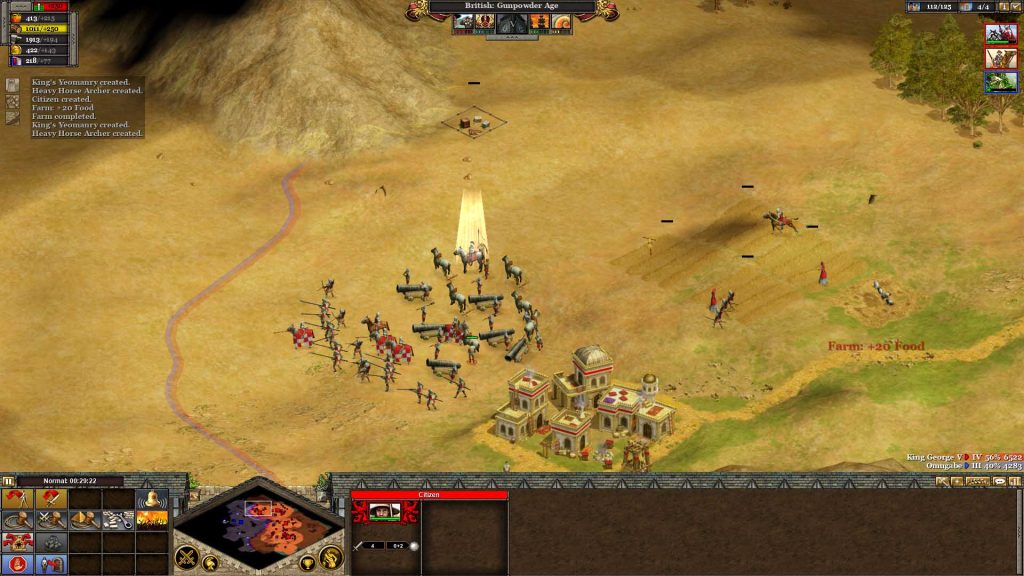
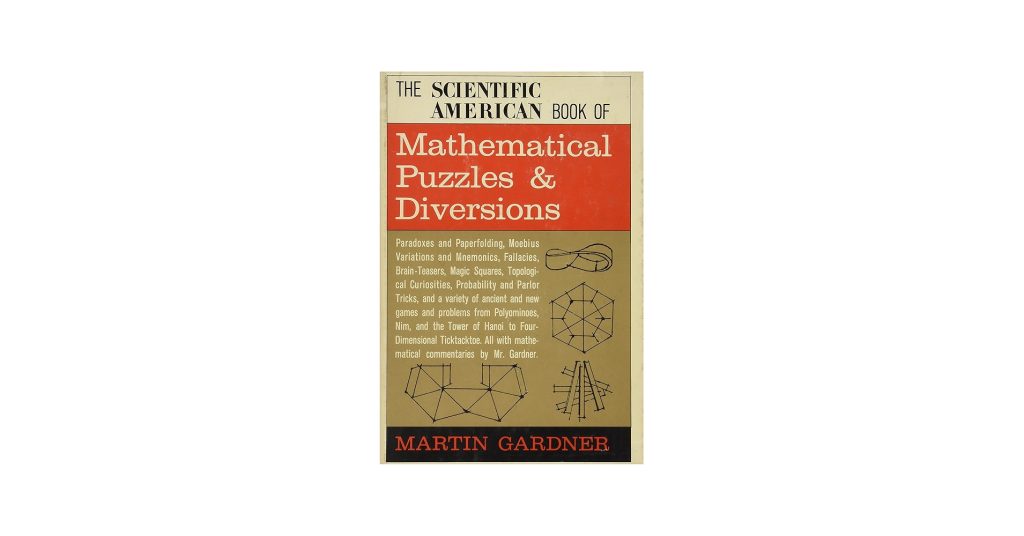
In the Modern Era, the digital revolution transformed logical challenges, making them more accessible and engaging through video games and mobile apps. Titles such as “Portal” and “The Witness” not only offer entertainment but also immerse players in intricate puzzles that require logical reasoning and creativity. This innovation has further popularized logical games, captivating a new generation of enthusiasts.
Reflecting on these historical milestones, it is evident that logical challenges serve not only as entertainment but also as vital tools for enhancing cognitive abilities like problem-solving, analytical thinking, and creativity. As we explore the fascinating evolution of these intellectual endeavors, we gain insight into the enduring human pursuit of knowledge and understanding. Join us as we delve deeper into the remarkable history of logical puzzles and their profound impact on society.
DISCOVER MORE: Click here to unlock the secrets of puzzle games
The Origins: Logical Challenges in Antiquity
The seeds of logical challenges were sown in the fertile minds of ancient civilizations, where the quest for understanding and intellectual prowess first began to take form. Early logical puzzles were employed not only for amusement but also as clever tools for philosophical discourse. In these formative years, the ancients sought to unravel the complexities of existence through logical reasoning, laying the groundwork for future generations.
Amongst the illustrious thinkers of Ancient Greece, Socratic questioning succeeded in distilling knowledge through methodical dialogue. His use of dialectics encouraged followers to dissect and analyze logical arguments—a practice that underpins formal logic even today. Furthering this endeavor, Epicurus and Aristotle contributed significantly to logical methodologies that are referenced in modern logical studies, including propositional and categorical logic.
Meanwhile, the contributions from Eastern philosophies, particularly in China and India, introduced unique logical concepts. In Chinese philosophy, the works of Confucius emphasized moral reasoning, while Indian scholars developed intricate forms of rhetoric and notational logic that would influence future logical thinkers across the globe. Such cross-cultural intellectual exchanges enriched the tapestry of logical challenges, establishing a diverse foundation that transcended geographic and temporal boundaries.
The Flourishing of Logic in the Middle Ages
Transitioning into the Medieval Era, logical challenges evolved from abstract philosophical musings to more structured forms. This period marked a transition where riddles and puzzles were often embedded within religious and literary texts, aiming to engage readers while simultaneously stimulating their minds. Iconic works such as “The Canterbury Tales” featured riddles that invited reflection and humor, thus showcasing the dual role of logical challenges in literature.
The emergence of mathematical puzzles during this time period was largely driven by the works of Islamic scholars. Pioneers like Al-Khwarizmi and Al-Khazin contributed to the field of algebra, which soon intertwined with logic in the form of complex problems requiring systematic approaches for their resolutions. This blend of mathematics with narrative not only laid the groundwork for modern algebra but also influenced European thinkers during the Renaissance, leading to a rebirth of interest in logical challenges across various disciplines.
Renaissance: The Age of Logic and Strategy
As scholars embarked on a vibrant journey of rediscovery during the Renaissance, innovative thinkers began to explore the intersection of science and mathematics with logic, heralding new forms of inquiry into logical puzzles. The rise of strategic games, like chess, became emblematic of this transformative period. Chess, in particular, emerged not just as a pastime but as a profound representation of strategic thought and logical reasoning, igniting discussions on strategy, foresight, and the importance of planning in both games and life.
During this time, the introduction of formalized strategies into games began to reflect their status as tools for education as well as entertainment. Through engaging with these challenges, players trained their minds to anticipate moves, analyze situations, and devise solutions—skills that proved invaluable not only in games but in various professional domains as well.
- Socratic Questioning: An early form of logical analysis.
- Riddles and puzzles: Integrated into literature to stimulate thought.
- Algebraic innovations: Blended mathematical concepts with logical problem-solving.
- Strategic games: Evolved as vital tools for developing cognitive skills.
The historical evolution of logical challenges underscores their significance not only as forms of entertainment but also as vital instruments for enhancing our cognitive capacities. The exploration of these puzzles throughout time reveals a fascinating trajectory, inviting individuals to engage with and appreciate the profound impact of logical reasoning in society.
The Evolution of Logical Challenges: From Antiquity to Modern Games
As we delve deeper into the annals of gaming, it is essential to understand how logical challenges have evolved significantly over time. From ancient civilizations employing simple puzzles to modern gaming incorporating intricate algorithms and AI, the progression is both fascinating and complex.
In ancient times, logical challenges took the form of board games such as Senet in Egypt and Go in China. These games required players to utilize strategies and critical thinking, laying the groundwork for modern logical reasoning. The shift from these rudimentary forms to more structured gameplay reflects humanity’s increasing fascination with not just entertainment, but also cognitive development.
Moving forward to the Middle Ages, games evolved alongside society, with chess emerging as a pinnacle of strategic thinking. Chess is not just a pastime; it is a reflection of medieval warfare tactics, serving as both a challenge and a training ground for leaders of the time. The intellectual rigor involved in playing chess informs many contemporary logical challenges found in various formats.
In the realm of modern gaming, the introduction of computer and video games has revolutionized the sector. Games like The Witness and Portal incorporate complex puzzles that demand innovative thinking and problem-solving skills. These games engage players in a way that varies from the solitary, board-bound experiences of the past. They also connect players globally, fostering a sense of community around tactical mastery.
Each shift in the design and mechanics of logical challenges highlights humanity’s relentless pursuit of intellectual stimulation. As technology continues to redefine how we engage with puzzles and strategies, the core essence of these logical challenges—the brain’s desire to solve problems and uncover mysteries—remains unchanged.
| Advantages | Benefits |
|---|---|
| Cognitive Skill Development | Logical challenges enhance critical thinking and problem-solving abilities. |
| Social Interaction | Many games foster community engagement, building social bonds through shared interests. |
This evolution not only showcases the adaptability of logical challenges but also underscores their significance in both social and cognitive realms. The appeal of logical challenges continues to resonate profoundly across generations, presenting new opportunities for discovery in the realm of gaming.
EXPLORE MORE: Click here to dive deeper
From Enlightenment to the Digital Era: The Expansion of Logical Challenges
The Enlightenment paved the way for a surge in intellectual pursuit, embracing the principles of reason and empirical evidence. During this time, logical challenges began to emerge as formalized disciplines in a way that can still be recognized in modern contexts. Thinkers like René Descartes and Gottfried Wilhelm Leibniz championed deductive reasoning, utilizing syllogisms and logical constructs that burgeoned into what we now understand as modern logic.
Moreover, this period witnessed the birth of logical games that were specifically designed to refine critical thinking skills. Games such as crossword puzzles and logic grid puzzles became not only popular diversions but also educational tools that encouraged structured thought processes. The publication of puzzles in periodicals, such as the “New York Times,” solidified their place in American culture, influencing generations to engage in cognitive challenges linked to logic.
As the 19th century rolled in, the field of logic found further expression in the realm of gaming. The introduction of mathematical games, such as Sudoku and logic mazes, required players to apply deductive reasoning to solve systematically. These games demanded a strategic approach where logical sequences led players to derive solutions. The pedagogical value of such challenges was recognized, affirming their role in enhancing cognitive faculties in both children and adults alike.
The Age of Digital Innovation: Logical Challenges Reimagined
With the advent of the digital age, logical challenges entered a new realm of sophistication and accessibility. The rise of computer programming and algorithmic logic has further evolved puzzles into interactive formats. Today, complex simulations and logic-based games are available at the click of a mouse or a tap on a smartphone.
Games such as Portal and The Talos Principle integrate intricate philosophical themes with engaging gameplay, compelling players to solve puzzles that challenge both their wits and their understanding of reality itself. These modern titles exemplify how traditional logical challenges have been transformed into immersive experiences that require not just intellect, but also creativity and lateral thinking.
The exponential growth of online platforms and mobile applications has democratized access to logical challenges. From logic-based brain training apps like Lumosity to popular platforms offering competitive puzzles like BrainBashers, the appetite for these challenges is ever-growing. Individuals can engage with others worldwide, fostering a community dedicated to problem-solving and logical reasoning.
- Enlightenment Influences: Rational thought shaped the foundation of modern logical challenges.
- Puzzles in Popular Culture: The rise of crosswords and logic puzzles in newspapers impacted American intellectual life.
- Mathematical Games: Pioneering logical engagements prompted educational advancements.
- Digital Evolution: Logic challenges transformed into interactive and immersive experiences.
Witnessing this historical evolution, one can appreciate how logical challenges have effectively transitioned from the pages of ancient scrolls to the mobile devices in our pockets. Each era has added layers of complexity, ensuring that the exploration of logical reasoning remains a compelling avenue for discovery and engagement across diverse audiences.
DISCOVER MORE: Click here to dive deeper
Conclusion: A Journey Through the Ages of Logical Challenges
In tracing the path of logical challenges from their inception in ancient civilizations to the intricacies of modern gaming, we see a fascinating evolution that reflects humanity’s quest for understanding and mastery of reasoning. The threads of logic, woven into the fabric of cultures across centuries, showcase how these challenges have transcended mere entertainment, evolving into critical tools for cognitive development and social interaction.
From the rigorous deductions of the Enlightenment thinkers to the groundbreaking mathematical games of the 19th century, and culminating in the dynamic digital experiences of today, logical challenges have continuously adapted to fit the zeitgeist of their times. Not only have they provided mental stimulation, but they have also fostered a sense of community and friendly competition through platforms that connect individuals around the globe.
Moreover, as we embrace the digital age, the realm of logical challenges continues to expand, incorporating elements of storytelling, art, and technology, thus inviting new generations to engage and explore. This ever-growing landscape presents an exciting opportunity to not just hone problem-solving skills but also to challenge our perceptions and understandings of logic itself.
Ultimately, the journey of logical challenges emphasizes their enduring appeal across cultures and eras—a testament to the human mind’s relentless curiosity and creativity. As we embark on new adventures in gaming and beyond, the legacy of these challenges serves as both a reminder and an inspiration to harness the power of logic in every aspect of our lives.
Related posts:
Unveiling the Power of Logic: How Logical Challenges Improve Critical Thinking
Logical Challenges in Teams: Strengthening Bonds and Collaboration Skills Through Games
The Psychology Behind Logical Challenges: What Do They Do to Our Mind?
Logical Challenges and Conflict Resolution: Using Puzzles to Enhance Interpersonal Skills
Logical Challenges in Groups: Strengthening Teamwork Through Mental Games
Logical Challenges in Education: Stimulating Critical Thinking in the Classroom

Linda Carter is a writer and puzzle expert specializing in mind games, brain teasers, and cognitive challenges. With extensive experience helping individuals enhance their problem-solving skills and think critically, Linda shares her knowledge on our platform. Her goal is to empower readers with practical advice, engaging puzzles, and strategies to sharpen their minds and achieve success in the captivating world of mind games and puzzles.