Mind Games and Game Theory: Strategies for Conflict Resolution
The Role of Mind Games and Game Theory in Conflict Resolution
In today’s complex social landscape, the psychological components of decision-making carry immense weight, especially when it comes to navigating conflict. The concepts of mind games and game theory offer profound insights into how individuals might strategically approach their interactions, be they in professional environments, personal relationships, or international affairs. These frameworks reveal not just the mechanics of choice, but also the underlying motivations that drive human behavior.
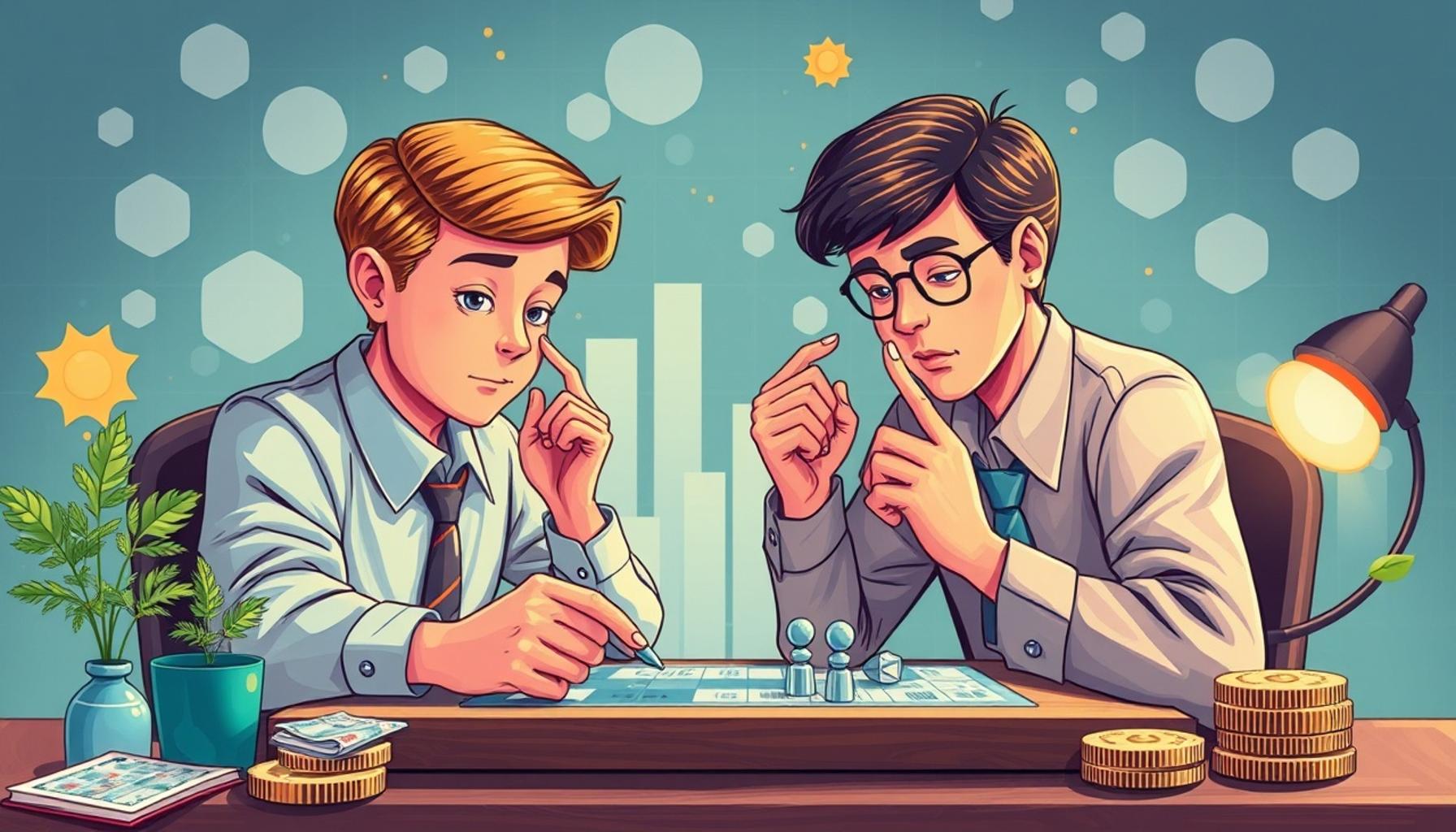
At the core of this exploration lies the concept of strategy formulation. This aspect of game theory illustrates how participants in any conflict assess their options based on anticipated actions from others. For example, in a workplace negotiation involving salary raises, an employee might decide to present their case after observing the company’s overall performance and understanding the boss’s inclination towards employee satisfaction. This approach demonstrates how calculated decisions take into account the likely responses of others in the environment.
Furthermore, psychological tactics such as persuasion and manipulation can significantly alter outcomes. Consider a situation in which two friends are deciding on a restaurant. One might emphasize the health benefits of a particular choice, subtly manipulating the other’s decision without direct confrontation. Understanding these psychological strategies gives individuals an edge in resolving conflicts and ensuring they are not solely reactive but proactive in their approaches.
A key component of game theory is its structured analysis, which utilizes mathematical models to predict potential outcomes based on varied inputs. For instance, the classic “prisoner’s dilemma” demonstrates how individuals might act against their own best interests if they lack trust. In a business context, organizations can apply these models to anticipate competitor moves and strategize accordingly, ensuring a more favorable position in the market.
The implications of mind games stretch across different settings, showcasing their versatility. In workplace dynamics, understanding office politics can turn rivalry into collaboration, benefiting productivity and morale. In international relations, countries often engage in strategy-driven negotiations that can avert conflicts or, conversely, escalate tensions based on miscalculated assumptions. Closer to home, in everyday interactions, grasping the nuances of personal relationships can help resolve disputes amicably—whether in a marriage, friendship, or family gathering.

By deepening one’s understanding of these strategies, individuals can sharpen their conflict resolution skills, making choices that create win-win scenarios for all parties involved. Are you prepared to tap into the principles of game theory to transform your approach to conflict? The journey into these intriguing concepts may not only enhance personal and professional relationships but also foster a deeper understanding of human behavior in all its complexities.
DISCOVER MORE: Click here to dive deeper
Understanding the Psychological Dimension of Conflict
At the heart of mind games lies the intricate mechanism of human psychology, which both shapes and is shaped by our interactions. To navigate conflicts successfully, we must first dissect the mental strategies that individuals employ. Understanding the psychological dimension of conflict can reveal paths to resolution that might otherwise remain hidden. By closely observing behavior and underlying motives, one can develop nuanced strategies aimed at alleviating tension and fostering cooperation.
One of the most fundamental elements in navigating conflict involves recognizing perception. Individuals often perceive situations through their own biased lenses, which can exacerbate misunderstandings. For instance, in a corporate setting, a manager may view an employee’s request for feedback as a challenge to their authority, while the employee simply seeks guidance for improvement. Here, the key to conflict resolution is reframing the perception, allowing both parties to see the situation from each other’s viewpoints.
Moreover, the use of effective communication techniques can facilitate positive outcomes. Techniques such as active listening, where one truly engages with another’s viewpoint before responding, play a crucial role in conflict resolution. This not only builds trust but also conveys respect, reducing hostility. Here are several communication strategies that can enhance conflict resolution:
- Open-Ended Questions: Encourage dialogue by asking questions that require more than a yes or no answer.
- Empathy Statements: Acknowledge the other person’s feelings and point of view, which can ease tension significantly.
- Clarification Requests: If something is unclear, ask for clarification instead of making assumptions.
- Reflective Listening: Paraphrase what the other person said to ensure understanding and build rapport.
The realm of game theory extends this notion by challenging traditional leaders to match their psychological tactics with strategic foresight. By employing models such as the Nash Equilibrium, individuals can anticipate the decisions of others based on their own choices. This awareness leads to a situation where everyone involved is fully informed about potential outcomes, creating an environment more conducive to collaboration than competition.
In practical applications, businesses often leverage these principles to optimize team dynamics. For instance, companies implement team-building exercises that utilize game theory strategies to assess group behavior and resolve conflicts. This proactive approach helps in aligning individual goals with organizational objectives, fostering a culture of cooperation over one of rivalry. Moreover, understanding the psychological dimensions of these games allows individuals to navigate the complexities of negotiation processes, whether they are wielding power in a boardroom or advocating for their personal interests amidst friends.
As we delve deeper into the relationship between mind games, psychological tactics, and game theory, it becomes increasingly evident that the conscious application of these strategies can lead to more favorable outcomes in conflicts, both big and small. By mastering these techniques, individuals open the door to transforming their adversarial encounters into cooperative efforts, ultimately crafting resolutions that benefit all parties involved.
Mind Games and Game Theory: Strategies for Conflict Resolution
To delve further into the intriguing realms of the human psyche and strategic interactions, it is essential to explore the practical applications of game theory in resolving conflicts. Understanding mind games allows individuals and organizations to better navigate complex situations where cooperation can lead to mutually beneficial outcomes. Below is a detailed overview in tabular format, highlighting the advantages associated with game theory as a conflict resolution strategy.
| Category | Details |
|---|---|
| Predictable Outcomes | Game theory provides a framework to analyze situations, enabling participants to anticipate potential responses and plan strategies accordingly. |
| Enhanced Collaboration | Utilizing game theory encourages players to focus on common goals, fostering stronger partnerships and improved communication during disputes. |
This structured approach to understanding conflict resolution highlights how mind games can be transformed into strategic advantages. By recognizing patterns of behavior and anticipated moves, stakeholders can better position themselves for successful negotiations and conflict resolution outcomes. Engaging with these concepts opens new avenues for exploration and effective dispute management, ultimately leading to healthier interactions in both personal and professional arenas.
DIVE DEEPER: Click here to learn more
Implementing Game Theory to Foster Collaborative Solutions
Understanding game theory not only enhances the strategic thinking of individuals involved in conflict but also provides a framework through which parties can anticipate and react to each other’s decisions. One of the primary concepts within game theory is the Prisoner’s Dilemma, which illustrates why two rational individuals might not cooperate, even when it is in their best interest to do so. This classic scenario can be seen in everyday conflicts—be it in negotiations or personal relationships. By recognizing the importance of mutual cooperation for favorable outcomes, individuals can strategize in ways that promote collaboration rather than self-serving behavior.
In the context of conflict resolution, the Iterated Prisoner’s Dilemma is particularly enlightening. This variant of the game posits that when players encounter the same scenario repeatedly, they are more inclined to build trust and cooperation over time. In practice, this understanding supports the implementation of conflict resolution mechanisms that enable ongoing dialogues. For example, organizations might establish multi-stage negotiation processes, allowing participants to cultivate relationships that lead to shared goals rather than temporary victories.
Moreover, leveraging the concept of cooperative game theory can provide new avenues for resolving disputes. This branch of game theory focuses on predicting how groups can work together to achieve a common goal, rather than making decisions based solely on individual interests. When teams within a business embrace cooperative strategies, they can significantly improve morale and satisfy their collective objectives. By recognizing that resource sharing, communication, and empathy can outweigh individual competitive instincts, organizations can cultivate a cooperative ethos that permeates through conflicts.
Strategic moves are also a vital element in game theory applicable to conflict situations. Players can benefit from a clear understanding of their own strengths and weaknesses, as well as those of their counterparts. For instance, in a negotiation between a supplier and a buyer, recognizing the supplier’s dependency on the buyer for sales can give the buyer leverage. However, instead of exploiting this advantage, employing strategies that consider long-term relationships—such as offering supportive terms or collaborative growth initiatives—can lead to resolutions that favor both parties. This type of strategic foresight embodies the essence of using game theory for conflict resolution.
Real-World Applications of Mind Games in Conflict Resolution
Mind games and game theory are not merely theoretical constructs; they have profound implications in real-world settings. For instance, in labor disputes, union leaders often deploy game-theoretic strategies to negotiate contracts. By understanding the game at play, they can formulate proposals that appeal to both labor and management, reducing the chances of strikes and fostering amicable resolutions.
Another excellent example lies in international diplomacy. The Cold War serves as a case study where both sides engaged in mind games, strategizing not only their military stances but also their economic and social initiatives to gain an edge. Realizing that mutual destruction was a possibility influenced both sides to ultimately seek out diplomatic channels, showcasing how underlying psychological games and strategic thinking can lead to peaceful resolutions in high-stakes situations.
As individuals and organizations continue to grapple with conflicts of various natures, the implementation of mind games and game theory strategies becomes increasingly relevant. The intricate dance of psychological understanding and strategic foresight provides a toolkit for navigating the challenging waters of human interaction. By embracing these methodologies, one can unlock pathways to peaceful resolutions that benefit all parties involved.
DISCOVER MORE: Click here to dive deeper
Conclusion: Navigating Conflict with Game Theory
In an increasingly complex world, the application of mind games and game theory as strategies for conflict resolution is vital for achieving sustainable outcomes. The insights provided by these methodologies serve as essential tools for individuals, organizations, and nations alike. By understanding the dynamics of cooperation versus competition, parties engaged in conflict can transcendentally shift from adversarial posturing to collaboration.
At the heart of these strategies lies the recognition that every conflict presents an opportunity for dialogue, trust-building, and compromise. Leveraging concepts like the Prisoner’s Dilemma and cooperative game theory allows stakeholders to navigate disputes in a manner that prioritizes long-term relationships over immediate self-interest. This understanding can transform how negotiations are approached, leading to resolutions that are more creative and inclusive.
Furthermore, the real-world applications of these theories—from labor negotiations to international diplomacy—demonstrate their practical significance. By strategically anticipating the moves of others and crafting responses that foster understanding and respect, participants can move closer to mutually beneficial solutions.
In conclusion, recognizing the profound implications of game theory not only enhances strategic thinking but also promotes a culture of cooperation in conflict resolution. Embracing these principles can empower individuals and organizations to navigate conflicts more effectively, ultimately leading to peaceful resolutions that benefit all involved. As we confront various challenges in our interconnected society, it is crucial to explore and implement these innovative strategies for a more harmonious coexistence.
Related posts:
The Intersection of Role-Playing Games and Complex Team Problem Solving
The Psychology Behind Logic Games: How to Solve Problems Creatively
The Role of Strategy Games in Improving Analytical and Problem-Solving Skills
Developing Problem-Solving Skills Through Classic Puzzles
Unraveling Mysteries: How Escape Games Enhance Collaboration and Creative Problem Solving
Mental Stimulation: How Digital Puzzles Can Enhance Creativity and Problem-Solving Ability

Linda Carter is a writer and puzzle expert specializing in mind games, brain teasers, and cognitive challenges. With extensive experience helping individuals enhance their problem-solving skills and think critically, Linda shares her knowledge on our platform. Her goal is to empower readers with practical advice, engaging puzzles, and strategies to sharpen their minds and achieve success in the captivating world of mind games and puzzles.