Developing Problem-Solving Skills Through Classic Puzzles

Unraveling the Power of Classic Puzzles
In a fast-paced world filled with complex challenges, the importance of problem-solving skills cannot be overstated. Engaging with classic puzzles offers a unique avenue for cultivating these essential abilities. From jigsaws to crosswords, these timeless challenges not only entertain but also sharpen cognitive function.
Why Choose Classic Puzzles?
Classic puzzles come with a myriad of benefits that extend beyond mere enjoyment. Here are some key features that make them exceptional tools for skill development:
- Enhances Critical Thinking: By breaking down complex problems into manageable parts, classic puzzles teach individuals to analyze situations more effectively. For instance, a Sudoku puzzle requires players to examine numbers already placed to deduce the missing ones, honing logical reasoning and deduction skills.
- Improves Memory: These puzzles challenge the brain to recall information and patterns as one works through the sequences or clues. Research shows that regularly engaging with puzzles like crosswords can improve memory retention, especially as one ages, making it a delightful way to keep the mind sharp.
- Boosts Creativity: Classic puzzles encourage out-of-the-box thinking by presenting unique problems that do not always have straightforward solutions. The creativity needed to assemble a jigsaw puzzle can lead to innovative problem-solving techniques in real-world situations.
Popular examples of classic puzzles include:
- Sudoku: Originating in Japan, this number-based puzzle has taken the world by storm, fostering logical reasoning and number placement skills. Millions engage with daily Sudoku grids in newspapers or apps, making it a modern ritual for those looking to enhance their cognitive faculties.
- Crossword Puzzles: Found in every major newspaper across the United States, crossword puzzles not only entertain but expand vocabulary and general knowledge. They challenge solvers to think quickly while also providing a sense of accomplishment with every completed grid.
- Jigsaw Puzzles: These tangible puzzles enhance spatial awareness and patience. In recent years, the popularity of jigsaw puzzles has surged, with families gathering around tables to tackle challenging images, fostering teamwork and focus.
The intersection of entertainment and education found in these puzzles can greatly aid personal and professional growth. By embracing the art of puzzle-solving, individuals not only find joy but also equip themselves with tools to tackle various life obstacles effectively. This combination of fun and learning makes classic puzzles a lifelong investment in cognitive health and critical skills development. Engaging with these stimulating challenges is not merely a pastime; it’s an opportunity for growth, discovery, and a deeper understanding of the world around us.
DISCOVER MORE: Click here to learn how puzzles can boost motivation
Unlocking the Cognitive Benefits of Puzzle Solving
Classic puzzles serve as more than just a source of entertainment; they act as cognitive gymnasiums, enabling individuals to build essential problem-solving skills that are applicable in various life scenarios. Engaging with these puzzles provides a structured environment where participants can practice and refine their abilities to tackle complex challenges. Let’s delve into the fundamental ways these puzzles contribute to cognitive development.
Building Blocks of Problem-Solving Through Puzzles
Classic puzzles allow individuals to engage with problem-solving strategies that nurture essential mental faculties. Here are some of the underlying skills developed through solving classic puzzles:
- Analytical Thinking: Puzzles require solvers to disassemble problems into smaller components. For example, when approaching a logic puzzle or solving a cross-section of a jigsaw puzzle, players must identify patterns and relationships. This practice not only sharpens analytical abilities but also enhances decision-making and strategic thinking in real-life situations. Academic research highlights that individuals who engage regularly in such cognitive exercises often demonstrate improved performance in analytical reasoning tests, equipping them with the ability to tackle diverse challenges more effectively.
- Attention to Detail: Many classic puzzles demand a keen eye for detail. In crossword puzzles, for instance, recognizing subtle nuances in wordplay or obscure clues is crucial for success. This skill seamlessly translates to professional environments, where attention to minute details can prove vital in avoiding critical errors. Workers in fields such as law, engineering, or medicine, where decision-making relies heavily on precise data, can greatly benefit from the meticulous attention to detail honed through puzzle-solving.
- Perseverance: Classic puzzles might present significant challenges, requiring multiple attempts to solve. Whether it’s revisiting a difficult jigsaw piece that just doesn’t seem to fit or grappling with a particularly tricky Sudoku puzzle, developing the patience to persist through frustration builds resilience—a dominant trait in effective problem solvers. Numerous successful individuals attribute their perseverance in professional contexts to the skills they developed through consistent engagement with puzzles, highlighting the long-term benefits of these seemingly simple activities.
The development of these skills through puzzle-solving isn’t merely theoretical; numerous studies support their practical benefits. Research from institutions like the University of Southern California has demonstrated that participants who regularly engage in puzzle activities showcase higher levels of cognitive function and adaptability. The mental acuity gained from these activities is invaluable in both personal and professional contexts, making puzzle-solving not just a leisurely activity but a strategic investment in brain health.
Furthermore, puzzles come in various forms that cater to different tastes and interests. From the intricate designs of jigsaw puzzles that tell a story when completed to the complex number placements in Sudoku, these activities can appeal to a wide audience and enhance cognitive skills across demographics. Many families in the United States have embraced puzzle-solving as a bonding activity—turning it into a cherished tradition during holidays or weekends, which not only fosters connection but also promotes collective cognitive engagement.
While many individuals engage with puzzles as a fun pastime, the underlying cognitive processes at play can often lead to unexpected opportunities for growth. The skills honed through solving a crossword, a jigsaw puzzle, or a Sudoku grid are transferable to complex real-life scenarios, providing an arsenal of problem-solving strategies suitable for varying contexts. Embracing the benefits of classic puzzles is not limited to entertainment; it’s a proactive approach to enhancing cognitive faculties that serve as the foundation for robust problem-solving capabilities. So, whether you’re a seasoned puzzler or a curious beginner, indulging in these classic games can pave the way for enhanced mental agility in everyday life.
Classic puzzles have long been celebrated not just for their entertainment value but also for their ability to enhance cognitive abilities. Engaging with puzzles offers a unique opportunity to develop problem-solving skills, critical thinking, and pattern recognition. These skills are essential not only in academic settings but also in everyday life. As individuals navigate complex challenges, whether academic, professional, or personal, the knowledge gained from solving puzzles can prove invaluable.
Moreover, classic puzzles come in various forms, from Sudoku and crosswords to logic puzzles and jigsaw challenges. Each type requires different approaches and strategies, enabling individuals to adapt their thinking and find innovative solutions. For instance, Sudoku enhances analytical skills, as players must decipher numbers’ patterns under specific constraints, while crossword puzzles foster vocabulary usage and lateral thinking.
Furthermore, the act of regularly tackling puzzles can instill a sense of perseverance and resilience. When faced with difficult challenges, puzzle solvers learn the importance of persistence, often iterating through multiple strategies before arriving at a solution. These experiences not only enhance one’s ability to solve problems but also improve overall mental agility.
| Advantages | Description |
|---|---|
| Enhanced Cognitive Skills | Puzzles prepare the brain for analytical challenges and improve memory retention. |
| Boosted Creativity | Engaging in puzzles encourages creative problem-solving and innovative thinking. |
Incorporating classic puzzles into daily routines can thus be seen as a strategic approach to fostering valuable skills that are applicable in numerous realms of life. The journey to becoming a skilled problem solver is filled with engaging challenges that not only entertain but also educate.
DISCOVER: Click here to find out how Sudoku can boost your critical thinking skills
Enhancing Collaboration and Communication Skills with Puzzles
While individual problem-solving skills are crucial, classic puzzles also offer opportunities for enhancing collaboration and communication abilities. Engaging in puzzles as a group creates a dynamic environment where participants learn to share ideas, negotiate solutions, and devise collective strategies. This aspect of puzzle-solving can be especially beneficial in educational settings and team-building exercises in professional environments.
The Power of Collaborative Puzzle Solving
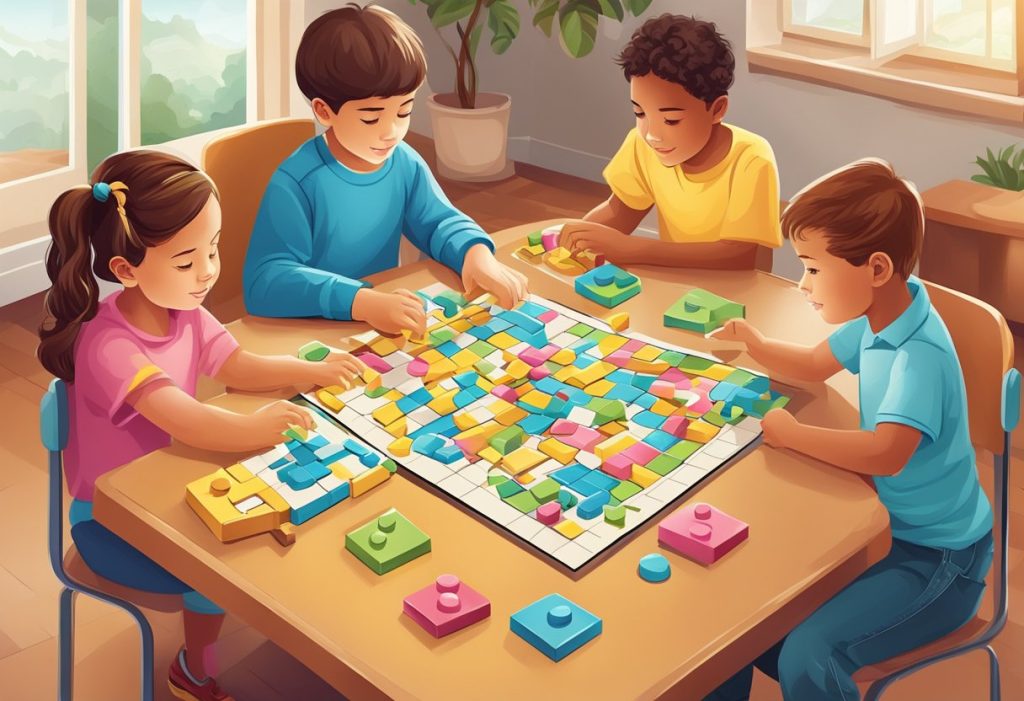
Group-based puzzle activities, such as assembling large jigsaw puzzles or competing in a team to complete crossword challenges, foster not only teamwork but also effective communication skills. When working together, individuals must articulate their thoughts clearly, listen to others, and integrate diverse perspectives to arrive at a solution. Research has shown that teams engaged in structured collaborative problem-solving are more adept at tackling complex challenges than those who work in isolation. The collaborative elements foster a sense of community, empowering participants to create cohesive strategies that leverage each member’s strengths and insights.
- Effective Communication: Communication is paramount when collaborating on puzzles. Each individual must convey their thought process and reasoning, which encourages clarity and articulation. This practice not only helps in puzzle-solving but also carries over to professional settings, where conveying ideas succinctly can inform decision-making and influence outcomes.
- Emotional Intelligence: Navigating the challenges of a puzzle as a group fosters emotional intelligence. Participants learn to read the room, gauge the energy of their teammates, and respond to frustrations with empathy. Developing this skill is essential, as a high degree of emotional intelligence can lead to more effective leadership and interpersonal relationships in both personal and professional spheres.
- Conflict Resolution: Disagreements on the best approach to tackle a puzzle are common, and navigating these situations teaches valuable conflict resolution skills. Puzzle solvers learn to address differing opinions respectfully and constructively, ultimately reaching a consensus that acknowledges all viewpoints. Such skills are transferable to any group activity, whether in a corporate setting, community involvement, or personal relationships.
Incorporating puzzle-solving into team-building exercises has gained traction in many corporate environments across the United States. Companies often utilize classic puzzles not only as icebreakers but also as tools for enhancing team dynamics. According to a study published by the American Psychological Association, organizations that foster teamwork through engaging activities, including puzzle-solving, report higher employee satisfaction and productivity. This demonstrates that puzzles can bridge the gap between leisure and professional development, reinforcing the idea that fun and efficiency can coexist.
Moreover, puzzles can aid in cultivating a growth mindset among participants. When they witness the collective effort leading to a successful conclusion or even the acceptance of failure as part of the learning process, they adopt an attitude that embraces challenges and values perseverance. This mindset can ultimately drive individuals and teams to push their limits and innovate, expanding the scope of their problem-solving capabilities.
The multifaceted benefits of solving puzzles extend beyond just mental acuity; they encompass the development of interpersonal skills that are vital in today’s interconnected world. The relationships forged through collaborative puzzle-solving can lead to lasting friendships and professional alliances, making it an enriching experience that transcends the simple act of piecing together a puzzle. As you explore the world of classic puzzles, consider engaging with others to amplify these benefits, enhancing not only your own skills but also those of your peers.
LEARN MORE: Click here to deepen your understanding
Conclusion: The Last Piece of the Puzzle
In the intricate dance of life, developing problem-solving skills can often feel daunting. Yet, through engaging with classic puzzles, individuals find not just enjoyment but critical opportunities for growth. The multifaceted advantages of puzzle-solving merge cognitive development with essential interpersonal skills, highlighting the significant role they play in both personal and professional arenas.
As we explored, puzzles like jigsaw challenges and crosswords foster not only mental resilience but also enhance collaboration, communication, and emotional intelligence. Learning to work effectively within teams and navigate conflicts is invaluable in today’s collaborative workplaces. Organizations across the United States are increasingly adopting these puzzle-based activities, recognizing their potential to boost employee productivity and satisfaction—an endorsement of the mantra that work can indeed be fun.
Moreover, when individuals engage in these activities, they cultivate a growth mindset that encourages perseverance and innovation. Each completed puzzle serves as a testament to collective effort and a reminder that the path to success often involves a series of trials and learning experiences. By embracing challenges and valuing teamwork, both personal and professional dynamics can be significantly strengthened.
As you reflect on your puzzle-solving adventures, consider it a cherished practice that enriches not only your mind but your relationships and communication. By integrating classic puzzles into your lives, you are not merely piecing together fragmented images or words; you are building a robust foundation for challenging life’s complexities. So, gather your friends or colleagues, and uncover the myriad benefits of developing problem-solving skills through the timeless joy of classic puzzles.
Related posts:
Mental Stimulation: How Digital Puzzles Can Enhance Creativity and Problem-Solving Ability
The Impact of Strategy Games on Improving Critical Thinking and Problem Solving
How Simulation Games Teach Problem-Solving Skills in Real-World Scenarios
The Importance of Intuition in Problem Solving in Board Games
The Impact of Sudoku Games on Improving Critical Thinking and Problem Solving
Word Games as a Tool for Cognitive Development and Problem Solving

Linda Carter is a writer and puzzle expert specializing in mind games, brain teasers, and cognitive challenges. With extensive experience helping individuals enhance their problem-solving skills and think critically, Linda shares her knowledge on our platform. Her goal is to empower readers with practical advice, engaging puzzles, and strategies to sharpen their minds and achieve success in the captivating world of mind games and puzzles.