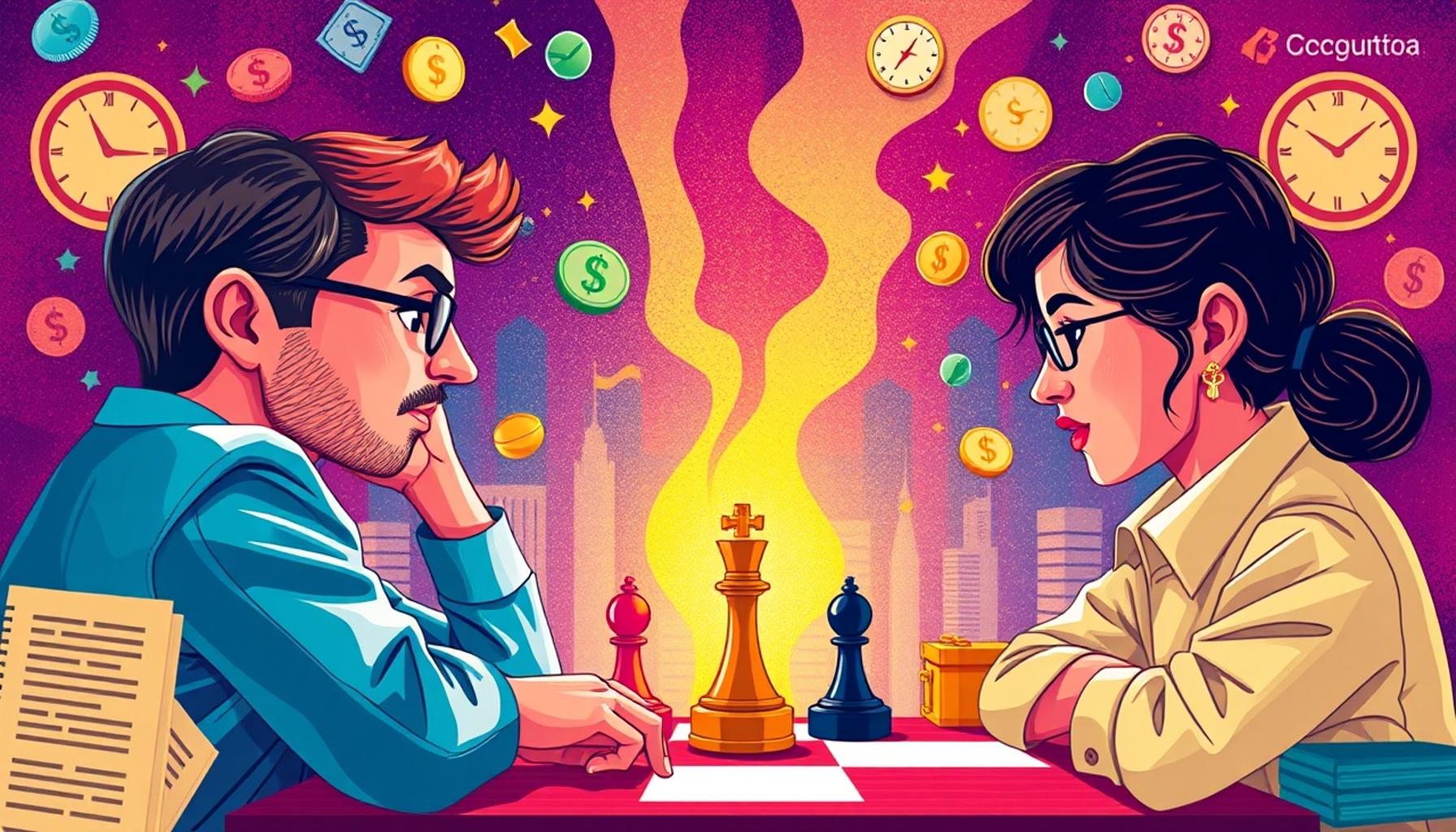
Puzzles and the Analytical Mind: How Logical Challenges Enhance Decision-Making in Competitive Scenarios

The Cognitive Benefits of Engaging with Puzzles
Puzzles serve as much more than just a pastime; they are gateways to refining the analytical mind. In competitive environments, engaging with challenging puzzles can transform the way individuals make decisions. The cognitive processes triggered by solving puzzles enhance the capabilities that are essential in today’s fast-paced world.
Consider the following benefits of solving puzzles:
- Enhanced Critical Thinking: Tackling logical challenges sharpens reasoning abilities. For example, solving a complex Sudoku puzzle requires not only the ability to recognize patterns but also the application of deductive reasoning to arrive at the correct numbers.
- Improved Focus: Concentrating on complex problems fosters greater attention to detail. When engaged in a jigsaw puzzle, an individual learns to notice subtle differences in shapes and colors, which translates into improved observational skills in professional scenarios.
- Greater Adaptability: Exposure to varied puzzles cultivates a readiness to pivot strategies. For instance, players of chess must frequently reassess their tactics in response to opponents’ moves, teaching them the importance of flexibility in decision-making.
Examples abound in fields that rely on quick and precise decision-making.
- Business executives often utilize logic games to bolster their strategic planning. Many executives participate in executive education programs that include puzzle-solving components, designed to enhance problem-solving skills and innovative thinking.
- Athletes employ mental challenges to stay sharp under pressure. For example, professional basketball players may use reaction time and memory puzzles to remain mentally agile during high-pressure games.
- Students tackle puzzles in academia to prepare for competitive exams. Engaging with riddles and math puzzles can help improve the cognitive skills needed for standardized tests like the SAT or GRE, often resulting in higher scores.
This intersection of logical challenges and decision-making is not merely theoretical. Numerous studies suggest that individuals who regularly engage with puzzles tend to outperform their peers in high-stakes scenarios. Research from institutions like the University of Michigan indicates that puzzle-solving can lead to improved cognitive functions like memory and problem-solving speed.
Furthermore, these mental workouts contribute to professional success and personal growth. The skills developed through a consistent puzzle habit are transferable to various aspects of life, from enhancing relationships through better communication to advancing one’s career with sharper problem-solving abilities. As more people discover the multifaceted benefits of puzzles, their role in everyday success becomes increasingly significant. Exploring different types of puzzles, from crosswords to logic games, can open new avenues for cognitive enhancement and eventual achievement.

DIVE DEEPER: Click here to uncover the historical insights
Unlocking the Potential of Puzzles in Thought Processes
The engagement with puzzles is emerging as a vital tool for enhancing the cognitive abilities required in today’s competitive landscape. As individuals wrestle with the complexities posed by different types of puzzles, they not only entertain themselves but also engage in cognitive exercises that strengthen their analytical skills. This profound interplay between solving puzzles and making decisions has prompted educators and professionals alike to advocate for the incorporation of puzzles into their everyday routines.
The benefits of puzzles extend beyond mere cognitive exercise; they actively shape the way individuals approach challenges in real-life situations. It’s within this framework that one can examine specific characteristics developed through puzzle-solving:
- Problem Recognition: Engaging with puzzles enhances the ability to identify problems efficiently. A quick glance at a crossword may lead one to recognize patterns that translate into identifying market trends, giving businesses a competitive edge.
- Strategic Planning: Many puzzles require a strategic approach to arrive at a solution. For instance, a player in a Rubik’s Cube challenge must devise a series of moves that account for shifting pieces, similar to strategizing in negotiations or project management.
- Stress Management: The pressure to solve a challenging puzzle can help simulate high-stress situations. For example, engaging in timed online brain games can condition individuals to maintain composure under pressure, essential in critical decision-making scenarios.
Numerous studies corroborate the correlation between puzzle-solving and improved decision-making capabilities. Researchers at Stanford University highlight that regular engagement with puzzles can boost executive functions, which are pivotal for effective decision-making. These cognitive enhancements include better planning, flexible thinking, and the ability to anticipate the consequences of various actions.
In corporate settings, a growing number of companies are turning to brain games and logic puzzles as team-building exercises. Such initiatives do more than promote camaraderie; they enhance decision-making skills among employees. By participating in these collaborative puzzle-solving sessions, teams experience firsthand the importance of communication and collaboration in reaching innovative solutions.
In academia, the trend of integrating puzzles into curriculums demonstrates a commitment to fostering analytical thinking from an early age. High school students engaging in logic puzzles and mathematical problems often report an increase in confidence and resilience, qualities that are advantageous during rigorous examinations and in future endeavors.
Ultimately, the relationship between puzzles and enhanced decision-making in competitive environments underscores the value of consistent mental stimulation. As individuals delve into the world of puzzles, they not only cultivate essential cognitive skills but also prepare themselves for real-world challenges. The puzzle-solving process is more than just a game; it’s a pathway toward mastery in analytical thinking, ready to face the intricate demands of competitive scenarios.
Puzzles and Critical Thinking Development
Engaging with puzzles sharpens analytical skills, a vital asset in competitive environments. When individuals solve puzzles, they undergo a process of critical thinking that enables them to analyze data and spot patterns effectively. This process promotes the ability to make connections between disparate pieces of information, essential for effective decision-making in high-stakes scenarios. For instance, chess players often exemplify this trait; they must quickly evaluate numerous factors and anticipate opponents’ strategies to devise winning moves.Furthermore, studies indicate that puzzle-solving can improve cognitive flexibility, allowing individuals to adapt their thought processes in response to new challenges. This flexibility is crucial when circumstances change unexpectedly in competitive situations. Through logical challenges, participants learn how to pivot their strategies and reassess their goals, boosting their competitive edge.
The Role of Collaboration in Puzzle Solving
Another fascinating aspect of puzzles is the collaborative element they often incorporate. Engaging in team-based puzzles can enhance interpersonal skills and promote effective communication among members. When individuals work together to solve a puzzle, they must articulate their thought processes and perspectives, fostering a culture of mutual respect and idea-sharing.Collaborative puzzle-solving prepares individuals for real-world competitive scenarios where teamwork is essential. By navigating differences in opinion and integrating various strategies, teams can improve their overall decision-making capabilities. This collaboration does not merely enhance group performance; it cultivates leaders who can innovate and navigate the demands of competition while maintaining harmony among team members.
Psychological Benefits of Puzzles
Diving into the world of puzzles also provides psychological benefits that further equip individuals in competitive settings. Engaging with logical challenges can reduce stress and enhance focus, allowing players to perform at their peak. As they immerse themselves in problem-solving, individuals often experience a therapeutic effect, which helps clear their minds. A focused mind is paramount in competitive fields, where distractions can lead to errors in judgment.Moreover, the overwhelming satisfaction derived from completing a challenging puzzle can build confidence and resilience. Each solved riddle acts as a benchmark, reinforcing the belief that complex problems can be tackled successfully. This confidence directly translates into competitive arenas, where self-assurance can often tip the scales in favor of a decisive winner.
| Category | Advantages |
|---|---|
| Critical Thinking | Enhances analytical skills through logical challenges. |
| Team Collaboration | Fosters cooperation and communication, vital for competitive success. |
| Psychological Benefits | Reduces stress and builds confidence, key components in decision-making. |
Incorporating puzzles and logical challenges into training regimens can yield significant dividends for individuals aiming to excel in competitive scenarios. By honing essential skills and fostering a positive mindset, participants position themselves strategically for success in any endeavor.
DISCOVER MORE: Click here to learn about the benefits of group memory exercises
The Learning Curve: Adapting Skills from Puzzles to Real-World Scenarios
The transition from solving puzzles to applying analytical thinking in competitive environments is not just theoretical; it is observable across various fields. The methodologies employed in puzzle-solving are paving the way for enhanced reasoning skills that translate seamlessly into daily life, significantly impacting decision-making processes.
One of the standout features of engaging with puzzles is the concept of incremental learning. Many puzzles, such as Sudoku or logic grids, encourage players to build upon prior knowledge gradually. This mirrors the iterative nature of decision-making in professional settings, where individuals frequently revisit previous decisions to refine their strategies. An employee faced with complex data must often draw upon previous projects to devise informed strategies. The analytical skills honed through puzzle-solving make this process more intuitive and effective.
Furthermore, puzzles foster the ability to think outside the box. In competitive scenarios, individuals often encounter unexpected developments that require innovative solutions. Problem-solving games that challenge conventional thinking help cultivate a mindset that embraces creativity alongside logic. For example, individuals who regularly engage in lateral thinking puzzles are better equipped to propose alternatives during brainstorming sessions or strategic planning discussions, thereby adding value to their teams.
The adaptability of skills developed through puzzle engagement is also visible in the world of sports. Athletes often rely on strategic puzzle-solving between plays to outmaneuver opponents. Basketball players may mentally map potential offensive plays as quickly as they would work through a chess puzzle, enabling them to make rapid-fire decisions that can alter the course of a game. Similarly, in business, professionals adept at navigating complex puzzles can anticipate competitor moves and react proactively, assuring their organization’s success in a fast-paced market.
Moreover, the integration of technology into puzzle-solving further enhances its relevance in contemporary decision-making paradigms. Mobile applications and online platforms allow individuals to engage with logical challenges in real-time, fostering a sense of immediacy similar to that found in high-stakes business environments. With services like online escape rooms or virtual logic games, teams can replicate the collaborative stress of an office scenario while honing their abilities to negotiate and collaborate under pressure.
Notably, there is emerging evidence that engaging with puzzles may even lead to long-term cognitive resilience. A study published in the American Journal of Psychology suggested that individuals who regularly stimulate their minds with puzzles show higher levels of adaptability in the face of change. This resilience is critical as organizations evolve, requiring workers who can pivot quickly and reassess their strategies without losing momentum.
In summary, the lessons learned from puzzle engagement extend well beyond entertainment. They cultivate essential analytical skills that enrich decision-making capabilities across various competitive arenas. As we further explore this fascinating connection, one can only imagine the profound impact that continued engagement with logical challenges will have on both individual growth and overall organizational success.
DISCOVER MORE: Click here to enhance your productivity
Conclusion: The Transformative Power of Puzzles in Analytical Thinking
In an increasingly competitive world, the ability to make informed and effective decisions is paramount. The exploration of puzzles as a tool for enhancing analytical thinking reveals a rich tapestry of benefits that extend far beyond mere entertainment. This article has illuminated how engaging with logical challenges cultivates critical thinking skills that deeply influence decision-making in high-pressure environments, whether in the corporate arena, sports, or daily life.
The skills garnered from regular puzzle-solving—such as incremental learning, lateral thinking, and cognitive resilience—form a solid foundation for tackling complex challenges. As we observe professionals adept at navigating intricate problems, it’s clear that the mental gymnastics required in puzzles foster not only individual growth but also team synergy and strategic foresight in organizational settings.
Moreover, as technology continues to evolve, the accessibility of these logical challenges via mobile applications and online platforms positions puzzles as essential training grounds for the minds of tomorrow. Organizations can capitalize on this potential by encouraging employees to engage in puzzle-related activities, thereby sharpening their decision-making skills in real-world applications.
Ultimately, the connection between puzzles and enhanced analytical abilities presents a powerful narrative. It advocates for the importance of play and creativity in professional development, suggesting that even the most complex decisions can be approached with the curiosity and engagement often fostered in solving puzzles. As we embrace this innovative approach to decision-making, we may uncover untapped potential within ourselves and our teams, paving the way for success in an ever-evolving landscape.
Related posts:
Breaking the Routine: The Impact of Group Puzzles on Strategic Collaboration
The Influence of Card Games on the Development of Planning and Forecasting Skills
Strategy in Motion: How Action Games Stimulate Critical Thinking and Adaptation
Strategy Games and the Development of Mental Resilience: How Puzzles Help Tackle Challenges
Strategy and Innovation: How Simulation Games Stimulate Critical Thinking in Business Environments
Unraveling the Enigma: Puzzles as Tools for Improving Decision Making

Linda Carter is a writer and puzzle expert specializing in mind games, brain teasers, and cognitive challenges. With extensive experience helping individuals enhance their problem-solving skills and think critically, Linda shares her knowledge on our platform. Her goal is to empower readers with practical advice, engaging puzzles, and strategies to sharpen their minds and achieve success in the captivating world of mind games and puzzles.