Logical Challenges and Conflict Resolution: Using Puzzles to Enhance Interpersonal Skills

Unlocking Interpersonal Skills Through Puzzles
In today’s fast-paced world, the ability to communicate effectively is more important than ever. Developing interpersonal skills is essential for both personal and professional relationships. One innovative way to cultivate these skills is through logical challenges, such as puzzles, which offer a platform for enhancing problem-solving techniques that facilitate collaboration and understanding among individuals.
Engaging with puzzles can be both stimulating and rewarding, as they feed into various aspects of interpersonal dynamics. For instance, let’s explore the ways puzzles foster these essential skills:
- Critical Thinking: Tackling a logical puzzle requires individuals to engage in critical thinking, honing the ability to analyze situations from different perspectives. For example, a Sudoku puzzle necessitates a strategic method of deduction where players must consider multiple possibilities before reaching a solution. This ability to dissect complex challenges is invaluable in real-life conflicts.
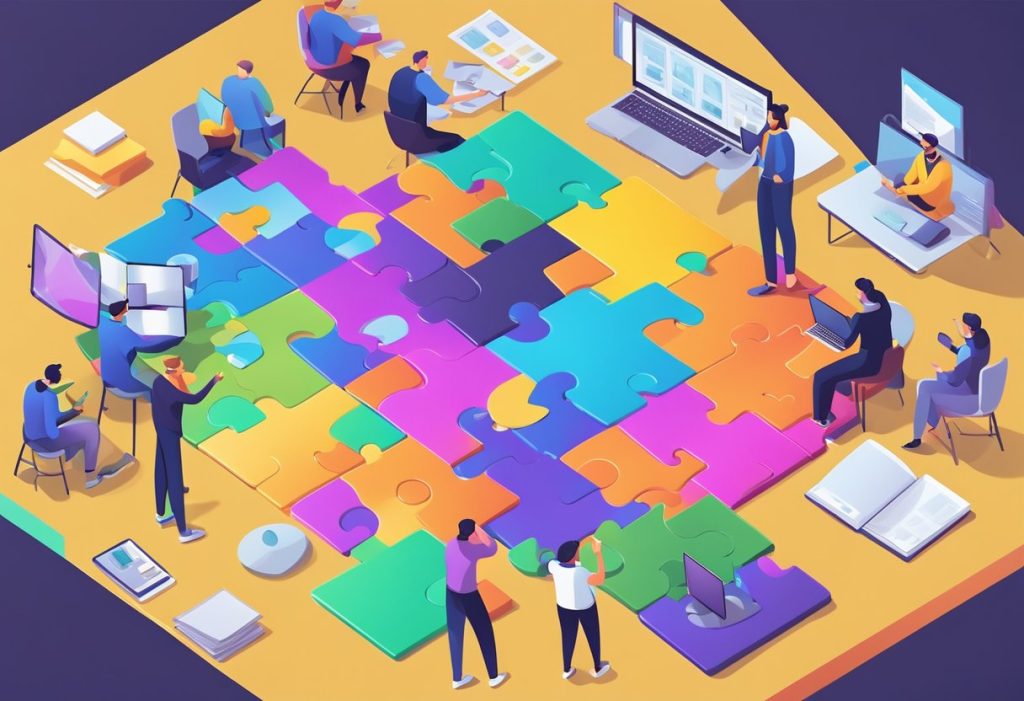
- Team Dynamics: Many puzzles, especially escape room scenarios or group logic games, require collaboration and teamwork. Participants must communicate effectively, negotiate differing opinions, and share insights to progress. Such collaborative environments help diminish conflicts and build stronger connections. In a workplace setting, incorporating team-building puzzles can transform workplace dynamics, allowing for enhanced teamwork and camaraderie among colleagues.
- Emotional Intelligence: Successfully solving puzzles often requires empathy and an understanding of teammates’ feelings and perspectives. This fosters a greater level of emotional intelligence, which is fundamental in conflict resolution. For instance, a team might work together on a jigsaw puzzle, leading to an understanding of each member’s approach and communication style, thus promoting compassion and patience during disputes.
Research consistently suggests that individuals who engage in logical and strategic activities refine their decision-making abilities. This practice enhances cognitive functions while cultivating an environment that promotes dialogue and mutual growth. Additionally, puzzles act as an engaging medium through which people can approach sensitive issues, as they divert focus from direct confrontation while still encouraging essential discussions.
As we investigate the captivating connection between logical challenges and effective conflict resolution, we will delve into various approaches to integrating puzzles into everyday exchanges. By embracing these methods, individuals in both personal and professional contexts can enhance interactions and foster a more harmonious atmosphere. Consequently, puzzles may prove to be not just a pastime, but a gateway to improved relationships and a better understanding of one another.
DIVE DEEPER: Click here to enhance your learning techniques
The Role of Puzzles in Critical Thinking and Collaboration
Puzzles, often considered mere entertainment, actually serve as a powerful tool for enhancing interpersonal skills and fostering effective conflict resolution. Engaging in logical challenges encourages individuals to think critically and collaboratively—skills that are invaluable in navigating everyday disputes and misunderstandings.
One of the standout features of logical puzzles is their ability to bolster critical thinking skills. These puzzles challenge participants to think logically and synthesize information quickly, applying reason to unravel complex scenarios. For example, logic grids used in deduction puzzles compel players to weigh various factors and rule out impossibilities. The approach taken to solve such puzzles mirrors real-life conflict situations where individuals must analyze facts, foresee consequences, and evaluate multiple viewpoints to arrive at a resolution. As people develop this capability through engaging with puzzles, they become better equipped to handle challenges in interpersonal relationships.
Puzzles also provide a framework for enhancing collaboration skills. Many puzzle-based activities are inherently social, requiring teamwork to achieve goals. The dynamics of working on a group puzzle, whether it’s a crossword or a collaborative escape room challenge, facilitate discussions and the sharing of diverse opinions. This teamwork nurtures an environment where members can express their thoughts and feelings, leading to an understanding of differing perspectives. Importantly, such environments can help reduce conflicts; by allowing participants to bond over shared tasks, relationships can flourish, paving the way for healthier interactions in other areas of life.
Furthermore, puzzles can enhance emotional intelligence among participants. As individuals navigate social puzzles, they must consider their teammates’ emotional states, perspectives, and communication styles. For example, working together on a complex puzzle can reveal the strengths and weaknesses of each member’s approach, enabling team members to practice empathy and patience—key components in any conflict resolution strategy. This heightened awareness not only cultivates compassion but also encourages individuals to respond more thoughtfully during discussions, facilitating more constructive dialogues.
Integrating Puzzles into Everyday Interactions
Recognizing the significance of puzzles as more than mere pastimes, various organizations and educators are advocating for their integration into both personal and professional settings. Many companies have started to incorporate puzzle-based team-building activities to improve workplace dynamics. This innovative approach not only serves to engage employees but also fosters communication and cooperation, essential elements for successful teamwork.
- Team-building workshops: These experiences often include problem-solving activities designed around puzzles, fostering open dialogue and collaboration.
- Classroom activities: Teachers are incorporating puzzles into their lessons as a means to boost critical thinking and social skills, providing students with tools that extend beyond academia.
- Family game nights: Engaging in puzzles with family members can help strengthen relationships by enhancing emotional intelligence while also providing a fun way to bond.
By embracing the multifaceted nature of puzzles, individuals can take significant strides toward mastering interpersonal skills that are crucial in today’s interconnected world. As we delve deeper into this intriguing relationship between logical challenges and conflict resolution, we invite readers to explore how these engaging activities can transform their interactions and lead to better understanding and cooperation.
Exploring the Impact of Puzzles on Interpersonal Skills
Puzzles are not just a pastime; they are powerful tools that can significantly enhance interpersonal skills through logical challenges and conflict resolution strategies. Engaging with puzzles promotes critical thinking and problem-solving abilities, which are essential for effective communication and collaboration.Learning to navigate through challenges posed by puzzles encourages individuals to approach conflicts with a calm and strategic mindset. For instance, brain teasers and riddles can drive discussions that require participants to articulate their reasoning and consider multiple perspectives. This practice enables individuals to build patience and empathy, key characteristics of strong interpersonal skills.Moreover, puzzles pique curiosity and foster teamwork. In group settings, solving puzzles together illuminates how diverse viewpoints can combine to create innovative solutions. Participants learn to negotiate ideas and build consensus, making them more adept at resolving future conflicts amicably.To better illustrate how puzzles serve as effective aids in developing these skills, the following table presents key advantages and their specific benefits related to using logical challenges in interpersonal contexts.
| Category | Benefits |
|---|---|
| Enhanced Communication | Solving puzzles together develops conversational skills and clear expression of thoughts. |
| Stronger Team Dynamics | Collaborative puzzle-solving fosters trust and teamwork, essential for conflict resolution. |
Engaging with these logical challenges opens new avenues for personal growth, transforming not only individual skills but also enhancing group interactions. As you dive deeper into the world of puzzles, you will discover how these playful challenges can redefine your approach to conflicts and relationships.
DISCOVER MORE: Click here to dive deeper
Puzzles as Catalysts for Creative Problem-Solving
In addition to enhancing critical thinking and collaboration, puzzles can act as powerful catalysts for creative problem-solving. They encourage individuals to employ divergent thinking—opening up the mental pathways needed to find innovative solutions to conflicts. This capacity for creativity is invaluable in situations where conventional approaches may yield insufficient results.
Consider the phenomenon of escape rooms, a popular team-based activity that combines logic and creativity. Each team member is faced with various puzzles that require them to think outside the box and consider unconventional solutions. Participants must transcend traditional thought patterns and make connections between seemingly unrelated clues. This practice fosters an environment where innovative ideas can flourish, preparing individuals for real-world conflict resolution where unique approaches are often required.
A study conducted by the American Psychologist Association found that engaging in creative problem-solving activities, such as puzzles, enhances the ability to generate multiple solutions to a problem—also known as “ideational fluency.” The more fluently individuals can generate ideas, the better equipped they are to find compromises or solutions during interpersonal disputes. By honing this skill through interactive puzzles, individuals can enter conflict situations with a more adaptable mindset, ready to explore various avenues toward resolution.
The Psychological Benefits of Puzzle-Based Engagement
Engaging with puzzles doesn’t merely sharpen cognitive functions; it can also yield significant psychological benefits that enhance interpersonal skills. When individuals work on puzzles, they experience a sense of accomplishment and improvement, which can boost confidence and self-esteem. These psychological benefits translate well into interactions, providing individuals with the resilience needed to navigate conflicts with poise.
Moreover, the nature of puzzle-solving can diminish stress levels. Studies suggest that engaging in leisure activities such as puzzles can trigger the release of endorphins, chemicals in the brain that promote happiness and relaxation. By alleviating anxiety, individuals are better able to approach conflicts with a clear mind, facilitating more constructive conversations and minimizing emotional reactions. This is particularly relevant in high-stakes scenarios, where stress often clouds judgment and hampers effective communication.
- Mindfulness through puzzles: The focus required to complete a puzzle embodies a form of mindfulness, honing individuals’ attentiveness and patience while they navigate through challenges. This present-mindedness can lead to calmer responses during interpersonal conflicts.
- Category-based challenges: Engaging in puzzles with thematic elements relevant to personal experiences or emotional states can foster deeper conversations among participants, creating a shared language for discussing difficult issues.
- Reflection and growth: After completing a puzzle, groups can engage in discussions regarding what worked, what didn’t, and how the process can be applied to real-life conflicts, encouraging a culture of continuous improvement.
Through these multifaceted benefits, puzzles ultimately bridge the gap between logical reasoning and emotional understanding—two critical components of effective conflict resolution. By integrating puzzles into daily practice, whether through professional development sessions, educational frameworks, or personal pastimes, individuals can cultivate an environment rich in interpersonal skills that serve them well across various aspects of life.
DIVE DEEPER: Click here to uncover how puzzles boost empathy
Conclusion
As we have explored throughout this article, puzzles serve not only as a captivating pastime but also as a meticulous tool for strengthening interpersonal skills and resolving conflicts. The integration of logical challenges into interpersonal interaction harnesses the power of creative problem-solving, enhancing both critical thinking and cooperative abilities. Whether in team settings like escape rooms or through solitary puzzle-solving exercises, these activities cultivate a mindset adept at generating innovative solutions.
Furthermore, the psychological benefits associated with engaging with puzzles pave the way for more effective communication and emotional intelligence. By fostering a state of mindfulness and boosting self-esteem, puzzles prepare individuals to approach conflicts with clarity and patience. This preparation is crucial in high-pressure scenarios, where emotional reactions can disrupt constructive dialogue.
Ultimately, incorporating puzzles into conflict resolution strategies presents an engaging method for real-time practice. Participants not only develop the necessary skills to navigate interpersonal differences but also create deeper connections with one another through shared experiences. Thus, as we navigate an increasingly complex social landscape, embracing puzzles as a vehicle for enhancement of logical challenges and conflict resolution can provide significant advantages, promoting healthier interactions and richer, more empathetic relationships. Exploring this dynamic further can yield new insights, fostering a culture where creativity and collaboration thrive, ultimately leading to more harmonious environments in both personal and professional realms.
Related posts:
The Evolution of Logical Challenges: From Traditional Puzzles to Interactive Apps
Logical Challenges in Teams: Strengthening Bonds and Collaboration Skills Through Games
Logical Challenges and Decision Making: How Problem-Solving Enhances Analytical Skills
The Art of Logical Challenges: Exploring Creativity Through Innovative Puzzles
The Psychology Behind Logical Challenges: What Do They Do to Our Mind?
Unveiling the Power of Logic: How Logical Challenges Improve Critical Thinking

Linda Carter is a writer and puzzle expert specializing in mind games, brain teasers, and cognitive challenges. With extensive experience helping individuals enhance their problem-solving skills and think critically, Linda shares her knowledge on our platform. Her goal is to empower readers with practical advice, engaging puzzles, and strategies to sharpen their minds and achieve success in the captivating world of mind games and puzzles.